
30 seconds to prepare · 60 seconds to speak
In CELPIP Speaking Task 4, you look at the same picture as in Task 3 and say what will happen next: 30 seconds to prepare, then 60 seconds to speak. It’s tempting to come up with a clever twist, and that’s where I often see students get stuck: an idea that’s easy to think of in your own language can be very hard to say in English. Simple predictions, said clearly, are all this task needs. Even if you don’t think of yourself as creative, this lesson shows you how to find five easy predictions in your 30 seconds, and gives you a simple template that fills all 60 seconds.
We’ll work through one example picture from start to finish:
- Preparation and note-taking: how to use your 30 seconds
- The template: a simple structure that keeps your predictions organized
- Useful phrases: phrases that show how sure you are, and show the rater a wider vocabulary
- The example answer: a full answer that puts it all together
- More example answers: the template with three different pictures
What Task 4 asks you to do
| What you do | Look at a busy picture and predict what will happen next |
| Preparation | 30 seconds to look at the picture |
| Speaking | 60 seconds |
| Tense | Future: will, going to |
On the test, Task 4 comes right after Task 3, and you see the same picture. But this time you don’t describe what you see. You say what you think is going to happen. Here’s an example, as it appears on the test screen (it’s the same lake beach from the Task 3 lesson):
In this picture, what do you think will most probably happen next?
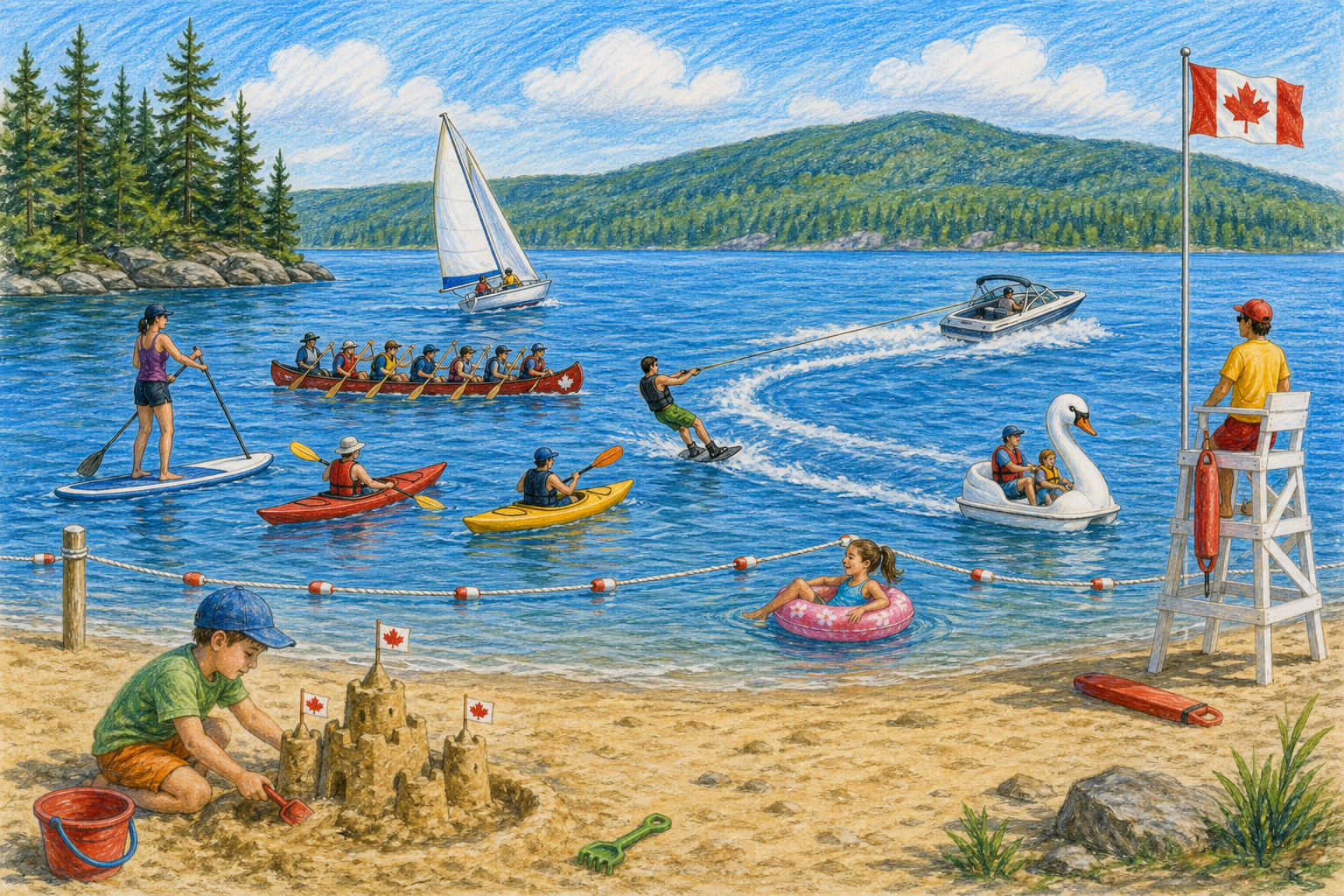
Read the question carefully: it says most probably happen. You’re not describing the picture, and you’re not telling a long story. You’re giving five short, believable predictions.
The answer at a glance
Before we go into detail, here’s the whole shape of a good Task 4 answer. Every part is explained below.
| Part | What you say |
|---|---|
| Purpose | I’m now going to describe some of the things I think will happen next. |
| Prediction 1 | First of all, I think [prediction 1]. |
| Prediction 2 | Another thing that’ll happen is [prediction 2]. |
| Prediction 3 | Also, I suppose [prediction 3]. |
| Prediction 4 | What’s more, I reckon [prediction 4]. |
| Prediction 5 | Finally, I guess [prediction 5]. |
| Wrap-up (only with 5+ seconds left) | These are just some of the things that I think will happen next. |
The first line tells the listener what you’re about to do. Then come five predictions, each with a signal word at the start and a little explanation after it. Finally, a short wrap-up if you have time.
That’s it. Now let’s go through each part.
1. Preparation and note-taking
You have 30 seconds to look at a busy picture and plan 60 seconds of speaking. Do it in three steps.
Step 1: Come up with five easy predictions
Five is the number you need. About five predictions is what it takes to reach 60 seconds.
Keep them easy. Don’t invent strange stories or complicated plot twists. You might have a clever idea in your own language, but if it’s hard to say in English, you’ll get stuck. Come up with predictions that are easy for you to express.
These easy predictions work for almost any picture:
| Easy prediction | Example for our picture |
|---|---|
| How the weather will change | It’ll stay sunny, so more people will come. |
| Will people continue or stop? | The canoe team will keep paddling. |
| What a person will do next | The boy will finish his sandcastle. |
| What will happen to an object | The swan boat will come back to the beach. |
The weather and continue or stop ideas are especially useful, because they fit any picture. If you’re running out of time, or you can’t think of a prediction with the words you know, fall back on one of them.
That doesn’t mean you can only use easy ideas. If your English is strong, add interesting predictions. But always make sure you can finish the sentence.
Remember what you noticed in Task 3. It’s the same picture, so you already know who and what is in it. The people and objects you described are the ones that will act next.
You’re the writer of this story. This task is open-ended, so use it to your advantage:
- Your predictions don’t have to be connected to each other.
- They don’t have to be what the picture obviously predicts.
- Choose whatever is easiest for you to say, not whatever is most original.
Step 2: Check that you know the verbs
Predictions are all about the verbs. If you don’t know the right verb, you’ll get stuck in the middle of the sentence while the timer keeps running.
So when you choose a prediction, quickly check: do I know the verb? Finish, paddle, fall, stay, come. If you don’t know the English verb, choose a different prediction. There’s always another one.
Step 3: Decide how likely each one is
Some predictions are more likely than others, and your answer should make that clear. Next to each prediction, write a quick reminder: sure, probably or maybe. Then you’ll use the right language when you speak (we’ll practice this in the useful phrases section).
How to write your notes
- Write who or what + the verb. boy → finishes sandcastle, last flag. That’s enough to build a sentence.
- Mark how sure you are: sure, prob. or maybe.
- Keep it short. Keywords only. No full sentences.
- If time runs out, just start. The purpose sentence gives you a few more seconds to think.
Your notes for our picture could look like this:
Practice: five predictions for two new pictures
Set a 30-second timer for each picture. Write five easy predictions, with how sure you are. Then compare with the sample notes.
1.
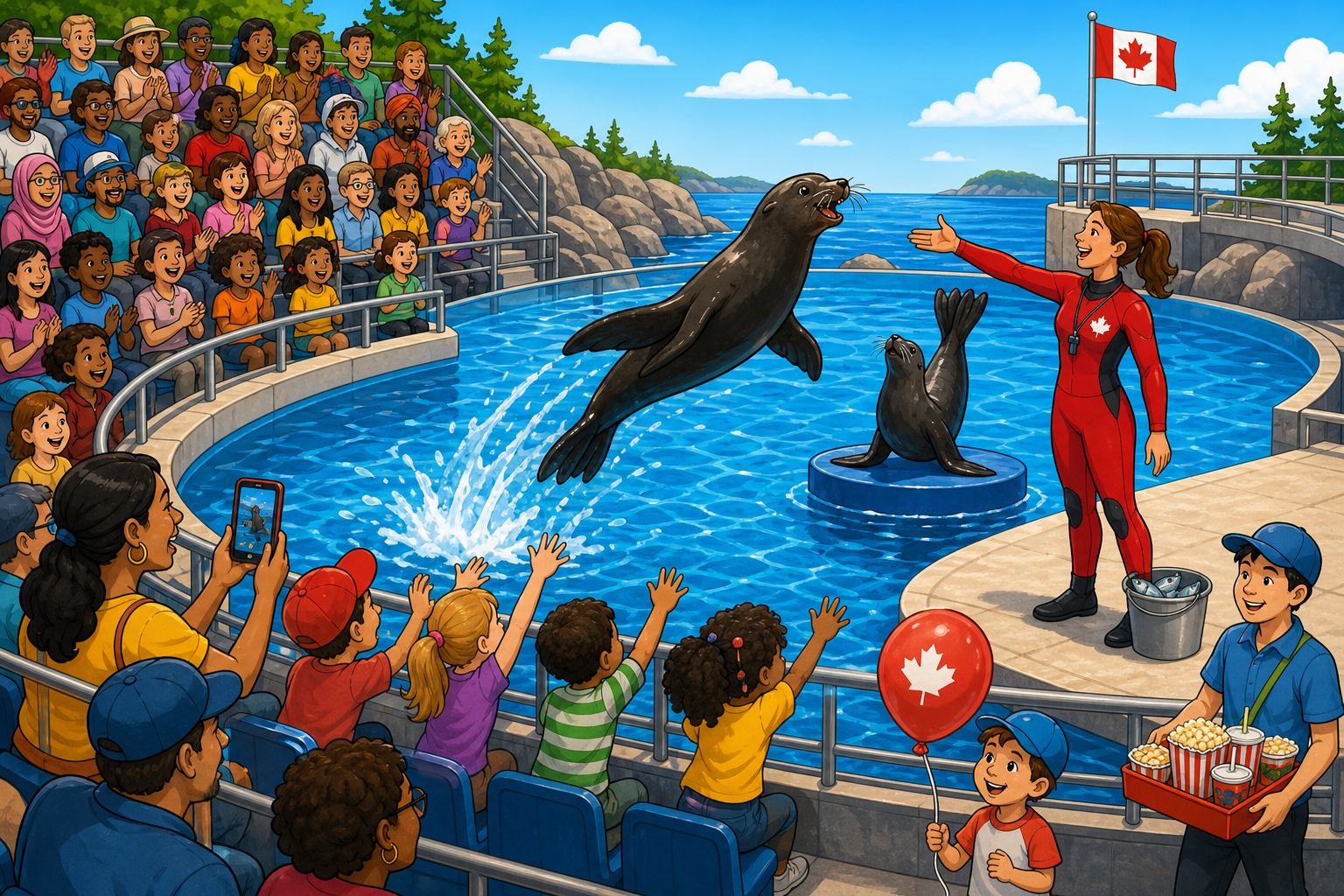
- seal: splashes the audience (sure)
- trainer: gives the seal a fish (sure)
- crowd: claps and cheers (prob.)
- boy: balloon floats away (maybe)
- woman: posts her video online (maybe)
2.
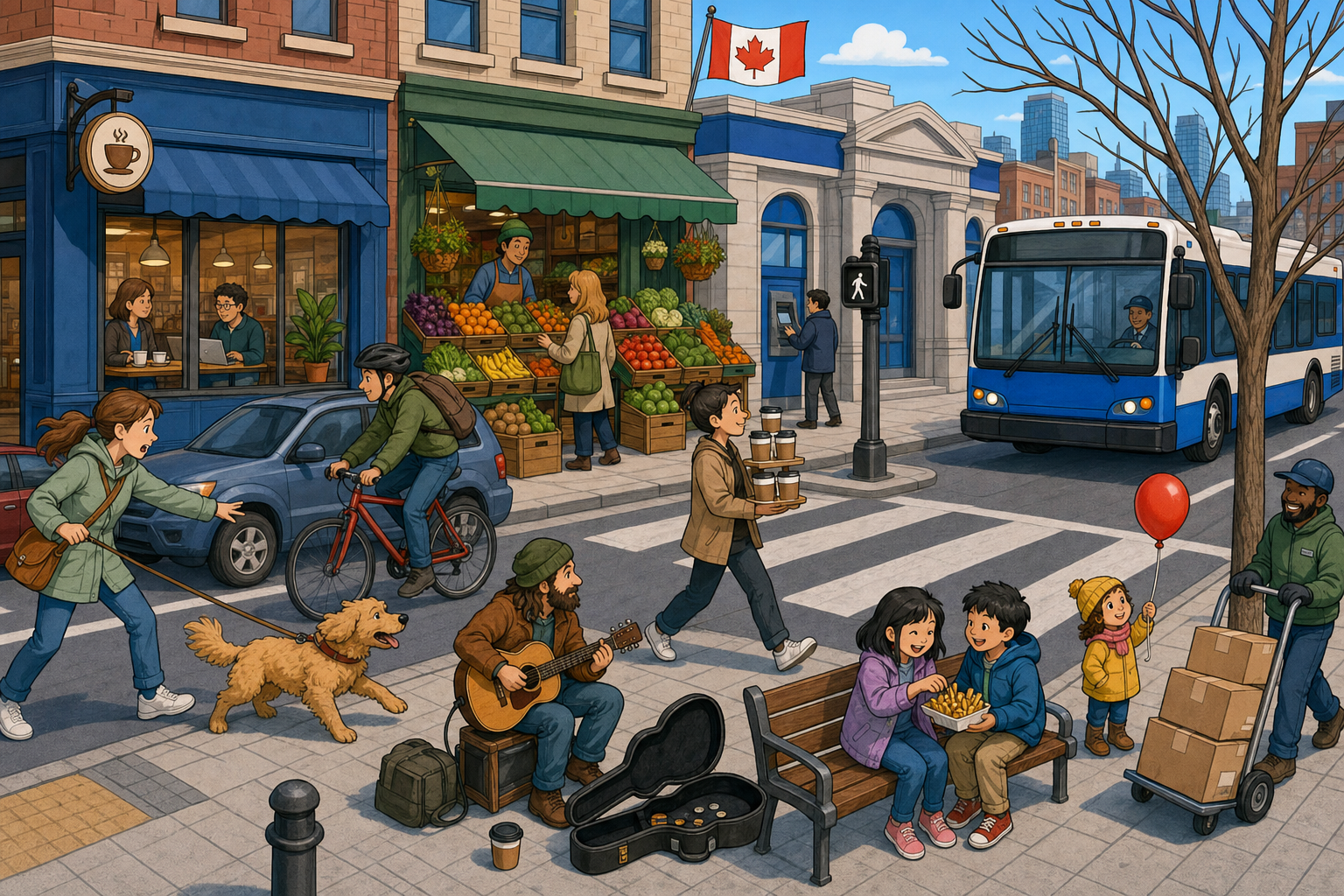
- boy: runs to get the ball (sure)
- dog owner: catches the leash (prob.)
- older couple: cross the street slowly (prob.)
- balloon: floats away (maybe)
- weather: gets darker, rain starts (maybe)
Recap: Come up with five easy predictions, check that you know every verb, and write who or what + the verb + how sure you are. Keep your notes to keywords.
2. The template
Now we turn the notes into an organized answer that’s clear and easy to follow. Here’s each part of the template, in order.
State your purpose
I’m now going to describe some of the things I think will happen next.
Start by telling the listener what you’re going to do. It’s a clear opening, and it gives you a few seconds to look at your notes.
Signal each prediction
Now give your five predictions, one after another. Start each one with a signal word or phrase, so the listener always knows a new prediction is coming:
| Prediction | Signal |
|---|---|
| 1 | First of all,… |
| 2 | Another thing that’ll happen is… |
| 3 | Also,… |
| 4 | What’s more,… |
| 5 | Finally,… |
Then explain each prediction with a few words: why you think so, or what will happen because of it.
First of all, I think the boy will finish his sandcastle and put the last flag on top, because he’s working hard on it.
Say that you’re guessing
A prediction is not a fact, so don’t say it like one. Use a guess marker in each prediction:
I think… · I suppose… · I guess… · I reckon…
I reckon the water-skier will fall into the water soon.
These four mean almost the same thing, so you can use a different one each time. That adds variety without making things harder.
Wrap-up
These are just some of the things that I think will happen next.
Only use it if you have five seconds or more left.
- 5 seconds or more left? Say the wrap-up.
- Less than 5 seconds? Skip it. Keep explaining your last prediction and let the time run out.
Save the template phrases
7 phrasesHow to use these: each phrase is ready to use in your writing or speaking. Replace the purple part with your own details. Tap the bookmark to save a phrase to Saved Words (free account), so you can review it before your test and use it in your practice.
I'm now going to describe some of the things I think will happen next.
First of all, I think prediction 1.
Another thing that'll happen is prediction 2.
Also, I suppose prediction 3.
What's more, I reckon prediction 4.
Finally, I guess prediction 5.
These are just some of the things that I think will happen next.
Recap: Purpose → five predictions, each starting with a signal word and using a guess marker → wrap-up, only if you have 5+ seconds left.
3. Useful phrases
Useful phrases are expressions that suit the task perfectly: here, phrases for talking about the future and about how sure you are. Using a variety of them shows the rater a wider range of vocabulary and grammar, which can raise your score.
Why these phrases? They’re natural, spoken English: common collocations and expressions that suit this task, not big written words. Learn more in Vocabulary That Lifts Your Level.
Here are twelve of them at a glance:
| Useful phrase | Example |
|---|---|
| will / be going to | The boy will finish his sandcastle. |
| is bound to / is sure to | The lifeguard is bound to stay on his chair. |
| may / might / could | The water-skier might fall into the water. |
| probably / possibly / maybe / perhaps | The canoe is probably going to reach the beach soon. |
| It’s very likely that… / It’s quite probable that… | It’s very likely that the weather will stay sunny. |
| I predict that… | I predict that the beach will be even busier in an hour. |
| Chances are,… | Chances are, the boy will finish his sandcastle. |
| I wouldn’t be surprised if… | I wouldn’t be surprised if the water-skier falls in. |
| There’s a good chance that… | There’s a good chance that the canoe will reach the beach first. |
| It’s unlikely that… | It’s unlikely that the lifeguard will leave his chair. |
| Any minute now, … / Soon,… | Any minute now, the boy will add the last flag. |
| Because of that, … / As a result,… | As a result, more people will come to the beach. |
Tap the bookmark on any phrase below to save it to your Saved phrases library, so you can review it before your test. Now let’s look at each one.
Picture, image, photo
First, a small one: picture, image and photo mean the same thing here. Switch between them so you don’t repeat the same word.
Talking about the future
will / going to
Predictions use the future simple: will or going to. Say them the way people really speak:
- Use the short form of will: say he’ll jump, not he will jump.
- Say gonna: in speech, going to sounds like gonna, as in he’s gonna jump.
| ✗ | ✓ |
|---|---|
| The man will jump into the water. | The man ‘ll jump into the water. |
| The boat is going to sink. | The boat is gonna sink. (in speech) |
- “The boy will finish his sandcastle.”
- “The canoe team is going to paddle back to the beach.”
Save these phrases
2 phrasesHow to use these: each phrase is ready to use in your writing or speaking. Replace the purple part with your own details. Tap the bookmark to save a phrase to Saved Words (free account), so you can review it before your test and use it in your practice.
Someone will do something.
Someone is going to do something.
How sure are you?
Good predictions don’t all sound equally sure. Showing how likely something is is a skill of its own, and it’s the key to this task. Think of it as a ladder:
| How sure | Phrases |
|---|---|
| Almost certain | is bound to, is sure to |
| Probably | probably, likely, it’s very likely that, it’s quite probable that, chances are, there’s a good chance that, I wouldn’t be surprised if |
| Maybe | may, might, could, maybe, perhaps, possibly |
| Unlikely | it’s unlikely that, it’s very unlikely that |
Try to use at least one phrase from each of two different levels in your answer, so the listener can hear that you’re thinking about likelihood.
is bound to / is sure to
Use these when you’re almost certain.
- “The lifeguard is bound to stay on his chair, because it’s a busy day.”
- “The parent and child are sure to pedal back to the beach.”
Save these phrases
2 phrasesHow to use these: each phrase is ready to use in your writing or speaking. Replace the purple part with your own details. Tap the bookmark to save a phrase to Saved Words (free account), so you can review it before your test and use it in your practice.
Something is bound to happen.
Something is sure to happen.
may / might / could
Use these when it’s possible, but not certain. They’re followed by a verb, with no to.
- “The water-skier may fall into the water.”
- “The girl in the swim ring might swim back to the beach.”
- “A cloud could cover the sun.”
Save these phrases
3 phrasesHow to use these: each phrase is ready to use in your writing or speaking. Replace the purple part with your own details. Tap the bookmark to save a phrase to Saved Words (free account), so you can review it before your test and use it in your practice.
Something may happen.
Something might happen.
Something could happen.
probably / possibly / maybe / perhaps
Adverbs show probability, too. Probably is strong, possibly and maybe are weaker.
- “The canoe is probably going to reach the beach soon.”
- “The sailboat is possibly going to go faster when the wind picks up.”
- “Maybe the boy will build a second sandcastle.”
- “Perhaps everyone will stay until the evening.”
Save these phrases
4 phrasesHow to use these: each phrase is ready to use in your writing or speaking. Replace the purple part with your own details. Tap the bookmark to save a phrase to Saved Words (free account), so you can review it before your test and use it in your practice.
Something is probably going to happen.
Something is possibly going to happen.
Maybe something will happen.
Perhaps something will happen.
It’s very likely that… / It’s quite probable that…
Two longer structures to start a prediction. They sound formal and confident.
- “It’s very likely that the weather will stay sunny.”
- “It’s quite probable that more families will arrive in the afternoon.”
Save these phrases
2 phrasesHow to use these: each phrase is ready to use in your writing or speaking. Replace the purple part with your own details. Tap the bookmark to save a phrase to Saved Words (free account), so you can review it before your test and use it in your practice.
It's very likely that something will happen.
It's quite probable that something will happen.
I predict that…
A simple and direct way to open a prediction. It also fits the task name.
- “I predict that the beach will be even busier in an hour.”
Save these phrases
1 phraseHow to use these: each phrase is ready to use in your writing or speaking. Replace the purple part with your own details. Tap the bookmark to save a phrase to Saved Words (free account), so you can review it before your test and use it in your practice.
I predict that something will happen.
More ways to sound natural
Chances are,…
An easy, friendly way to say probably.
- “Chances are, the boy will finish his sandcastle before lunch.”
Save these phrases
1 phraseHow to use these: each phrase is ready to use in your writing or speaking. Replace the purple part with your own details. Tap the bookmark to save a phrase to Saved Words (free account), so you can review it before your test and use it in your practice.
Chances are, something will happen.
I wouldn’t be surprised if…
This means I expect it. It’s a natural way to say something is quite likely.
- “I wouldn’t be surprised if the water-skier falls into the water.”
Save these phrases
1 phraseHow to use these: each phrase is ready to use in your writing or speaking. Replace the purple part with your own details. Tap the bookmark to save a phrase to Saved Words (free account), so you can review it before your test and use it in your practice.
I wouldn't be surprised if something happens.
There’s a good chance that…
- “There’s a good chance that the canoe team will reach the beach first.”
Save these phrases
1 phraseHow to use these: each phrase is ready to use in your writing or speaking. Replace the purple part with your own details. Tap the bookmark to save a phrase to Saved Words (free account), so you can review it before your test and use it in your practice.
There's a good chance that something will happen.
It’s unlikely that…
Not every prediction has to be positive. This one tells the listener something is not probable, which shows you can talk about all levels of likelihood.
- “It’s unlikely that the lifeguard will leave his chair, because he has an important job.”
Save these phrases
2 phrasesHow to use these: each phrase is ready to use in your writing or speaking. Replace the purple part with your own details. Tap the bookmark to save a phrase to Saved Words (free account), so you can review it before your test and use it in your practice.
It's unlikely that something will happen.
It's very unlikely that something will happen.
Any minute now, … / Soon,…
Use these to show when something will happen.
- “Any minute now, the boy will put the last flag on his sandcastle.”
- “Soon, the canoe will reach the beach.”
Save these phrases
2 phrasesHow to use these: each phrase is ready to use in your writing or speaking. Replace the purple part with your own details. Tap the bookmark to save a phrase to Saved Words (free account), so you can review it before your test and use it in your practice.
Any minute now, something will happen.
Soon, something will happen.
Because of that, … / As a result,…
Use these to connect one prediction to another, so your answer sounds like a story and not a list.
- “The weather will stay sunny. Because of that, more people will come to the beach.”
- “More people will arrive. As a result, the lifeguard will be even busier.”
Save these phrases
2 phrasesHow to use these: each phrase is ready to use in your writing or speaking. Replace the purple part with your own details. Tap the bookmark to save a phrase to Saved Words (free account), so you can review it before your test and use it in your practice.
Because of that, something will happen.
As a result, something will happen.
How many should you use? Try to use four or five different useful phrases in one answer, including phrases from at least two levels of the ladder. You don’t need all of them.
4. The example answer
Here’s a full answer for our picture. It follows the template and uses some of the useful phrases. Template phrases and useful phrases are in bold.
I’m now going to describe some of the things I think will happen next.
First of all, I think the boy will probably finish his sandcastle and put the last little flag on top. Another thing that’ll happen is that the lifeguard is bound to stay on his chair and keep watching the swimmers, because it’s a busy day.
Also, I suppose the people in the long canoe will paddle back to the beach soon, and the parent and child on the swan boat are sure to follow them. What’s more, I reckon the water-skier may fall into the water, because the boat is turning very fast.
Finally, I guess it’s quite probable that the weather will stay sunny, so even more people will come to the beach.
These are just some of the things that I think will happen next.
What makes it work:
- It follows the template from start to finish, with a clear signal for each prediction.
- It makes five predictions, and each one is easy to say.
- It uses guess markers (I think, I suppose, I reckon, I guess), so nothing sounds like a fact.
- It shows different levels of likelihood: is bound to and is sure to (almost certain), probably and it’s quite probable that (likely) and may (maybe).
- It uses the short form it’ll, and keeps the verbs simple.
- It ends with a wrap-up, because there was time left.
More example answers
The same template works for every Task 4 picture. These three answers use real practice pictures: a calm scene where nothing big is happening, a busy scene, and a picture full of small accidents waiting to happen. Open the ones you want to see.
Example 2: A calm scene
In this picture, what do you think will most probably happen next?
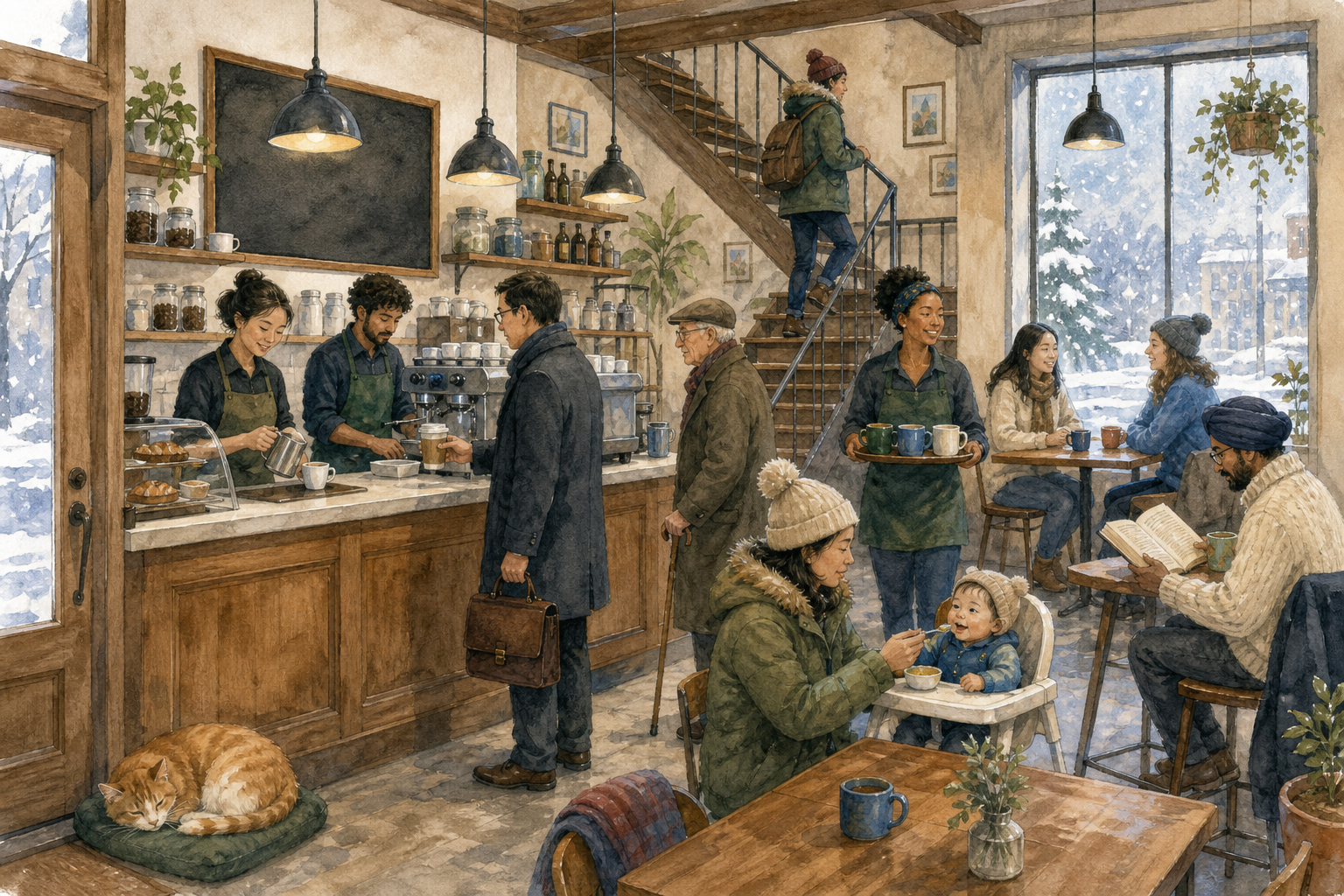
I’m now going to describe some of the things I think will happen next.
First of all, I think the man in the dark coat will take his coffee and leave for work, because he’s carrying a briefcase and he looks like he’s in a hurry. Another thing that’ll happen is that the waitress is bound to take those mugs over to the two women by the window.
Also, I suppose the old man with the walking stick will order next, and chances are, he’ll sit down somewhere near the counter. What’s more, I reckon the baby might spill some food, so the mother will probably need a napkin soon.
Finally, I guess the snow will get heavier, and as a result, more people will come in to warm up with a hot drink.
These are just some of the things that I think will happen next.
About 60 seconds at a natural pace.
What to notice:
- When nothing dramatic is happening, predict small, ordinary next steps: someone leaves, someone orders, someone sits down.
- Each prediction comes from something you can see (the briefcase, the tray of mugs, the snow), so it sounds believable.
Example 3: A busy scene
In this picture, what do you think will most probably happen next?
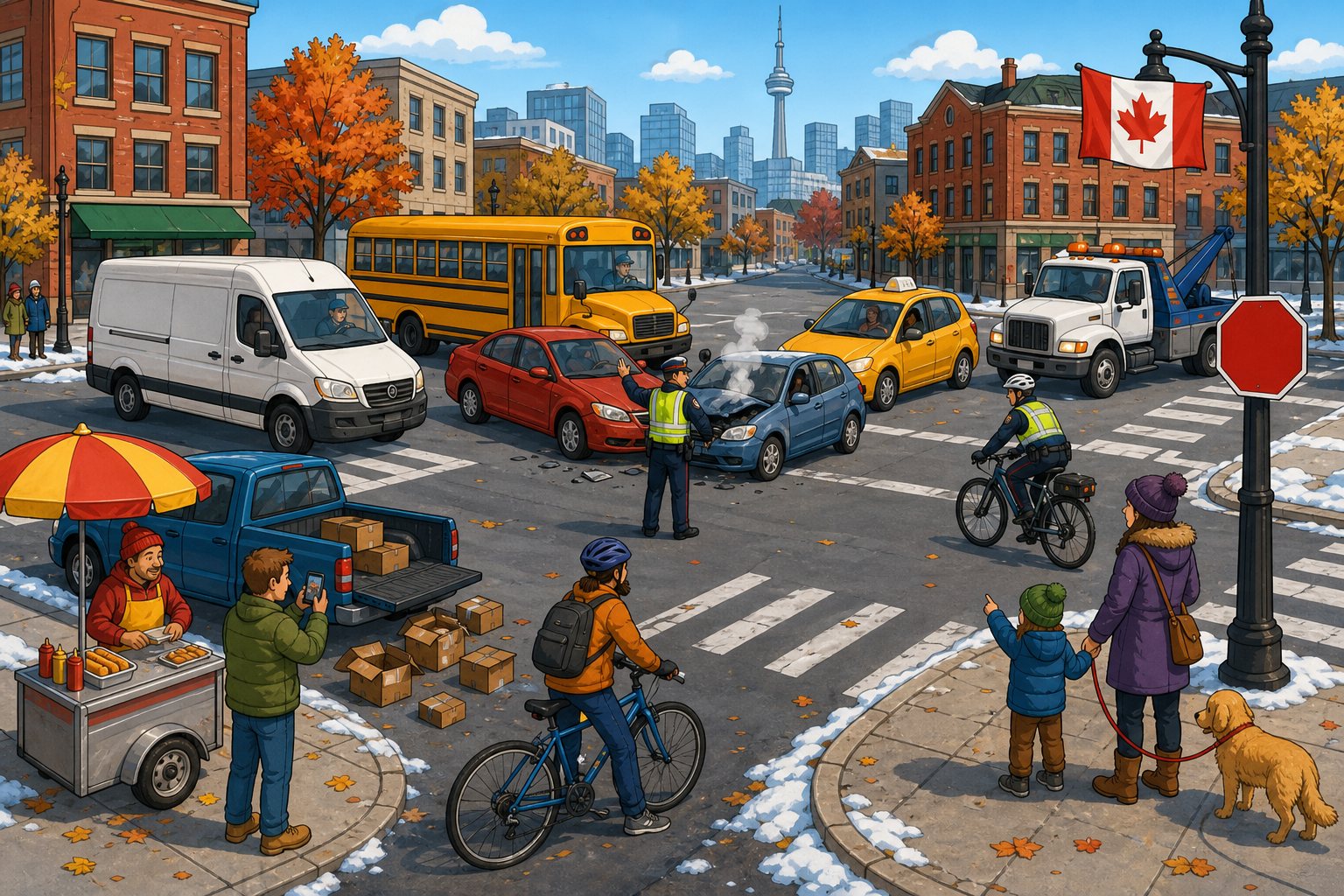
I’m now going to describe some of the things I think will happen next.
First of all, I think the tow truck will take away the blue car, because it’s steaming and it probably can’t be driven. Another thing that’ll happen is that the police officer is bound to talk to both drivers and write down what happened.
Also, I suppose the driver of the blue pickup will stop and pick up the boxes, because they’re blocking part of the road. What’s more, I reckon the man who’s filming may post the video online, and I wouldn’t be surprised if lots of people watch it.
Finally, I guess that any minute now, the traffic will start moving again, and the school bus will be able to drive on.
These are just some of the things that I think will happen next.
About 60 seconds at a natural pace.
What to notice:
- The accident gives the first two predictions, but the answer also uses the people around it: the pickup driver, the man filming, the school bus.
- It shows how sure each guess is: is bound to (almost certain), may (maybe), I wouldn’t be surprised if (quite likely).
Example 4: Small accidents waiting to happen
In this picture, what do you think will most probably happen next?
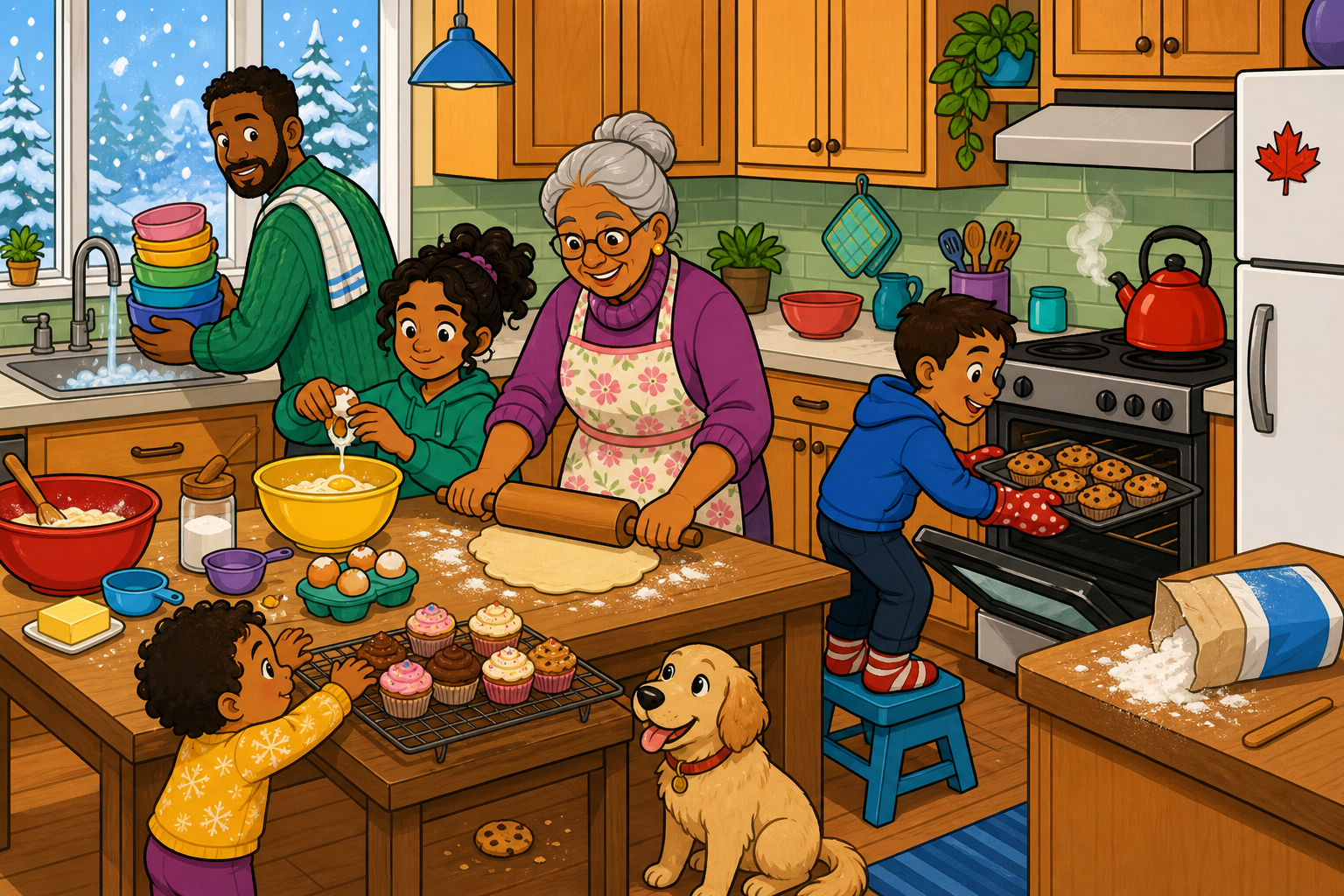
I’m now going to describe some of the things I think will happen next.
First of all, I think the dog is bound to grab that cookie on the floor the moment nobody’s looking. Another thing that’ll happen is that the toddler will take one of the cupcakes, and chances are, she’ll end up with icing all over her face.
Also, I suppose the grandmother will cut the dough into shapes, maybe for cookies or a pie. What’s more, I reckon the bag of flour might fall off the counter, because it’s already tipped over and spilling everywhere.
Finally, I guess there’s a good chance that the whole family will sit down together later and enjoy everything they’ve baked.
These are just some of the things that I think will happen next.
About 60 seconds at a natural pace.
What to notice:
- Look for things that are about to go wrong: the cookie on the floor, the toddler’s hand, the tipped-over flour. They make easy predictions.
- The last prediction looks further ahead (later), which gives the answer a natural ending.
Common mistakes
| Mistake | Fix |
|---|---|
| Describing what’s in the picture | Predict: say what will happen |
| Complicated predictions that need words you don’t know | Choose easy ones, and check the verbs first |
| Fewer than five predictions | Prepare five. About five fills 60 seconds |
| Saying predictions like facts | Add I think / I suppose / I reckon, and a probability phrase |
| Every prediction sounds equally sure | Mix bound to, probably and might |
| ”The man will jump." | "The man ‘ll jump.” |
| Using the present tense: “The boat sinks.” | Use the future: “The boat will sink.” |
| Rushing the wrap-up with 2 seconds left | Only wrap up with 5+ seconds left |
Practice
Use the template and at least four useful phrases to answer this question, then listen back to your recording.
Check your recording:
- I started with a purpose sentence
- I made five predictions, each with a signal word
- I used a guess marker (I think, I suppose, I reckon)
- I showed different levels of likelihood
- I used at least four different useful phrases
- I only wrapped up if 5+ seconds were left
- I spoke for at least 50 seconds
Open a Task 4 set on Celpora, use the template, and get instant AI feedback on all four scoring areas.
Practice Task 4: Making Predictions. 30s prep · 60s speaking · AI feedback on all four dimensions




