
60 seconds to choose · 60 seconds to prepare · 60 seconds to speak
In CELPIP Speaking Task 5, you choose one of two options, then persuade someone that your choice is better than a different option: 60 seconds to choose, 60 seconds to prepare, then 60 seconds to speak. A question I hear often is: which option is the right one? The answer is that it doesn’t matter for your score. What matters is choosing the option you can explain most easily in English, and using the details on the screen to compare. Even if comparing two things on the spot feels hard, this lesson shows you how to choose quickly and what to compare, and gives you a simple template that fills all 60 seconds.
We’ll work through one example from start to finish:
- Preparation and note-taking: how to choose and how to use your 60 seconds
- The template: a simple structure that keeps your comparison organized
- Useful phrases: phrases for similarities, differences and persuading
- The example answer: a full answer that puts it all together
- More example answers: the template with three different questions
What Task 5 asks you to do
| What you do | Choose one of two options, then persuade someone that your choice is better than a different option |
| Choosing | 60 seconds (no speaking) |
| Preparation | 60 seconds |
| Speaking | 60 seconds |
| Tense | Present, with comparisons: cheaper than, whereas |
This task has two screens before you speak. Here’s an example of each.
Screen 1: choose. You see two options with a photo and some details. You choose the one you prefer. You don’t speak yet.
Your supervisor at the local food bank has asked you to help pick the format for a fundraising event. You have looked into two possible events. Using the pictures and information below, choose the option you prefer. In the next section, you will persuade your supervisor that your choice is the better one. If you do not choose an option, the computer will choose one for you. You do not need to speak for this part.
 The Outdoor Charity Run
- capacity: 400 participants
- entry fee: $25 per person
- 30 volunteers needed
- outdoors; weather dependent
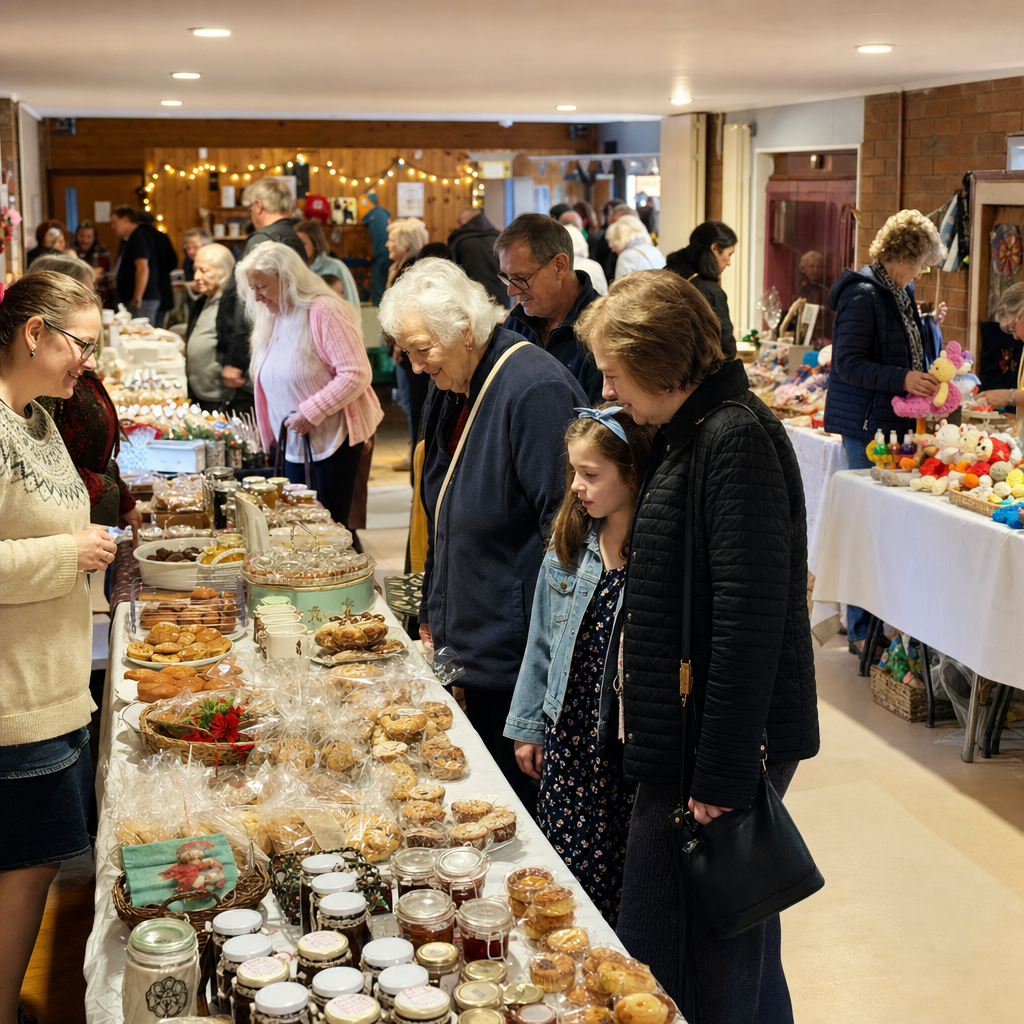 The Community Bake Sale and Craft Fair
- capacity: 150 participants
- entry fee: $10 per person
- 10 volunteers needed
- indoors; runs in any weather
Screen 2: prepare, then speak. The computer now shows your choice next to a different option, the one the other person is suggesting. You have 60 seconds to prepare, then 60 seconds to persuade them that your choice is better.
Your supervisor is suggesting a different event (their choice, below). Persuade your supervisor that the option you chose is more suitable by comparing the two.
The Outdoor Charity Run - capacity: 400 participants
- entry fee: $25 per person
- 30 volunteers needed
- outdoors; weather dependent
 The Formal Gala Dinner
- capacity: 120 participants
- entry fee: $75 per person
- 20 volunteers needed
- indoor hall; elegant catered setting
Read carefully who you’re talking to. The question names a person, here a supervisor, and you speak to them: I think we should…
The answer at a glance
Before we go into detail, here’s the whole shape of a good Task 5 answer. Every part is explained below.
| Part | What you say |
|---|---|
| Introduction | I’ve carefully compared our two final options and I think we should go with [your choice]. |
| Comparison 1 | Firstly, as far as [feature] is concerned… |
| Comparison 2 | Secondly, in terms of [feature]… |
| Comparison 3 | Finally, as you can see… |
| Each one | Compare the two options, then give your opinion |
| Wrap-up (only with 5+ seconds left) | These are just some of the reasons why I think we should select [your choice] rather than [the other choice]. |
The first line says which option you chose. Then come three comparisons, each one about a different feature. Finally, a short wrap-up if you have time.
That’s it. Now let’s go through each part.
1. Preparation and note-taking
You use the 60 seconds on each screen differently. Do it in three steps.
Step 1: Find the factors, then choose
It doesn’t matter which option you choose. There is no correct answer. You’re scored on how well you speak, not on what you pick.
On screen 1, your job is simple: find the factors the options are compared on. Both options usually list the same kinds of details. For our example, the factors are:
- Capacity: how many people
- Price: the entry fee
- Volunteers: how many helpers are needed
- Setting: outdoors or indoors
Then choose. Don’t ask “which one do I like?” Ask “which one can I explain more easily in English?” Here, the charity run has more numbers to talk about, so we’ll choose the charity run.
Now write your first notes. Only your choice matters at this point, so write your choice at the top, and the factors with your option’s details under it: capacity 400, price $25, volunteers 30, outdoors.
Step 2: Add the other option and compare
On screen 2, you see your choice next to the new option. Now look more closely. Take the same factors from your notes and add the other option’s details next to each one:
| Factor | Charity run (your choice) | Gala dinner | What you can say |
|---|---|---|---|
| Capacity | 400 | 120 | The run reaches many more people |
| Price | $25 | $75 | The run is much cheaper |
| Volunteers | 30 | 20 | Similar: both need helpers |
| Setting | Outdoors, relaxed | Indoors, elegant | Different atmosphere |
Pick three factors where you have the most to say. Choose the ones where the numbers are easy to compare, and include one similarity, because the template and the useful phrases cover it.
Avoid factors you can’t say in English. If a detail needs vocabulary you don’t know, leave it out. Three well-explained comparisons are better than five rushed ones.
Step 3: Add your reasons
A comparison alone isn’t enough: this task is about persuading. For each factor, add why it favours your choice:
- Capacity: 400 vs 120 → we can reach more people → we’d raise more money.
- Price: $25 vs $75 → almost anyone can afford it → more people will join.
That reason is your evaluation, and it’s what makes your answer persuasive.
How to write your notes
You write your notes in two passes, on the same page:
- On screen 1: your choice and the factors, with your option’s details.
- On screen 2: the other option’s details (after vs), and your reasons (after an arrow).
A few rules:
- Write the numbers. They’re on the screen, and they’re the easiest things to compare.
- Use arrows and keywords. No full sentences.
- If time runs out, just start. The introduction sentence gives you a few more seconds to think.
Your notes after both screens could look like this:
Practice: choose, compare and write notes for two more questions
Set a 60-second timer for each question. Choose an option, then write three comparisons against the third option. Then compare with the sample notes.
1. Choosing the staff holiday party venue. Your manager asks you to help choose.
| Downtown Banquet Hall | Lakeside Lodge | Rooftop Restaurant (their suggestion) | |
|---|---|---|---|
| Seats | 60 people | 50 people | 35 people |
| Distance | 10 minutes from the office | 40 minutes | 5 minutes |
| Price | $75 per person | $45 per person | $60 per person |
| Extra | Sit-down dinner and dance floor | Buffet and outdoor skating | Three-course menu and skyline view |
Sample notes if you chose the Banquet Hall:
- seats: 60 vs 35 → fits the whole team
- price: $75 vs $60 → rooftop cheaper, but dinner + dance floor
- distance: 10 vs 5 min → similar, both close
2. Leasing a small office for a team of four.
| Queen Street (downtown) | Riverside (quiet district) | Maple Industrial (their suggestion) | |
|---|---|---|---|
| Rent | $1,400 per month | $1,330 per month | $1,050 per month |
| Desks | 4 people | 5 people | 8 people |
| Distance | 5 minutes to downtown | 15 minutes | 30 minutes |
| Extra | No parking, close to the subway | One free parking spot | Two free parking spots, far from transit |
Sample notes if you chose Queen Street:
- distance: 5 vs 30 min → saves time every day
- transit: subway close vs far → easy for clients
- desks: 4 vs 8 → similar, enough for 4
Recap: On screen 1, find the factors, choose the option you can explain more easily, and write the factors under your choice. On screen 2, add the other option’s details and your reasons, and pick three factors, including one similarity.
2. The template
Now we turn the notes into an organized answer that’s clear and easy to follow. Here’s each part of the template, in order.
Introduction
I’ve carefully compared our two final options and I think we should go with the outdoor charity run.
Say which option you chose, to the person named in the question. It tells them your answer straight away.
Make your comparisons, one by one
Now go through your three features, one at a time. For each one, do three things:
1. Enumerate. Number your points, so the listener can follow:
| Point | Say |
|---|---|
| 1 | Firstly, I think… |
| 2 | Secondly, I believe… |
| 3 | Finally, as you can see… |
2. Signal the point of comparison. Tell the listener which feature you’re talking about:
| Phrase | Example |
|---|---|
| As far as [feature] is concerned,… | As far as capacity is concerned,… |
| In terms of [feature],… | In terms of price,… |
| With regard to [feature],… | With regard to setting,… |
| When it comes to [feature],… | When it comes to volunteers,… |
3. Compare, then evaluate. First say how the two options compare, using the useful phrases in the next section. Then give your opinion:
- I personally think the run works much better for our event.
- Again, I feel the run is a better fit for a food bank.
Putting the three steps together:
Firstly, as far as capacity is concerned, the run can welcome 400 participants, whereas the gala only has room for 120. I personally think that works much better for a fundraiser, because we can reach more people.
Wrap-up
These are just some of the reasons why I think we should select the outdoor charity run rather than the formal gala dinner.
Only use it if you have five seconds or more left.
- 5 seconds or more left? Say the wrap-up.
- Less than 5 seconds? Skip it. Keep explaining your last point and let the time run out.
Save the template phrases
11 phrasesHow to use these: each phrase is ready to use in your writing or speaking. Replace the purple part with your own details. Tap the bookmark to save a phrase to Saved Words (free account), so you can review it before your test and use it in your practice.
I've carefully compared our two final options and I think we should go with your choice.
Firstly, I think point 1.
Secondly, I believe point 2.
Finally, as you can see, point 3.
As far as feature is concerned, comparison.
In terms of feature, comparison.
With regard to feature, comparison.
When it comes to feature, comparison.
I personally think your choice works much better for the group.
Again, I feel your choice is a better fit for the group.
These are just some of the reasons why I think we should select your choice rather than the other choice.
Recap: Introduction → three comparisons (enumerate, signal the feature, compare, give your opinion) → wrap-up, only if you have 5+ seconds left.
3. Useful phrases
Useful phrases are expressions that suit the task perfectly: here, phrases for comparing two things and persuading. Using a variety of them shows the rater a wider range of vocabulary and grammar, which can raise your score.
Why these phrases? They’re natural, spoken English: common collocations and expressions that suit this task, not big written words. Learn more in Vocabulary That Lifts Your Level.
They come in three groups: phrases for similarities, phrases for differences, and phrases for persuading.
Here are fifteen of them at a glance:
| Useful phrase | Example |
|---|---|
| Likewise, … / Similarly,… | The gala needs volunteers. Likewise, the run needs helpers. |
| Just like… | Just like the gala, the run needs volunteers. |
| An obvious similarity between… and… is that… | An obvious similarity between the two is that both need volunteers. |
| Unlike…, … | Unlike the gala, the run costs only $25. |
| In contrast to…, … | In contrast to the gala, the run welcomes 400 people. |
| …, whereas… | The run welcomes 400, whereas the gala has room for 120. |
| Although…, … | Although the gala sounds elegant, the run is cheaper. |
| The most striking difference is that… | The most striking difference is that the run is much bigger. |
| Another way these two options differ is that… | Another way they differ is that one is outdoors. |
| Compared to…, … | Compared to the gala, the run is more affordable. |
| On the other hand,… | The gala is elegant. On the other hand, it’s expensive. |
| The main advantage of… is that… | The main advantage of the run is that everyone can afford it. |
| The biggest drawback of… is that… | The biggest drawback of the gala is that it’s small. |
| far more… than… / three times as many… as… | The run is far more affordable than the gala. |
| For this reason, … / That’s why… | For this reason, I believe the run will raise more money. |
Tap the bookmark on any phrase below to save it to your Saved phrases library, so you can review it before your test. Now let’s look at each one.
Similarities
When a feature is the same in both options:
Likewise, … / Similarly,…
Use these at the start of a sentence, after you’ve described the first option.
- “The gala needs 20 volunteers. Likewise, the run needs helpers on the day.”
- “The gala has a speaker. Similarly, the run has a start line with a host.”
Save these phrases
2 phrasesHow to use these: each phrase is ready to use in your writing or speaking. Replace the purple part with your own details. Tap the bookmark to save a phrase to Saved Words (free account), so you can review it before your test and use it in your practice.
Likewise, something similar about the other option.
Similarly, something similar about the other option.
Just like…
- “Just like the gala, the run needs volunteers to help on the day.”
Save these phrases
1 phraseHow to use these: each phrase is ready to use in your writing or speaking. Replace the purple part with your own details. Tap the bookmark to save a phrase to Saved Words (free account), so you can review it before your test and use it in your practice.
Just like the first option, the second option has the same feature.
An obvious similarity between… and… is that…
A longer structure that sounds confident. It’s a natural way to introduce the similarity you chose in your notes.
- “An obvious similarity between the run and the gala is that both need volunteers.”
Save these phrases
1 phraseHow to use these: each phrase is ready to use in your writing or speaking. Replace the purple part with your own details. Tap the bookmark to save a phrase to Saved Words (free account), so you can review it before your test and use it in your practice.
An obvious similarity between the first option and the second option is that similarity.
Differences
When a feature is different between the two options:
Unlike… / In contrast to…
Both mean this is different from that. After the comma, give the feature of the other option.
- “Unlike the gala, which costs $75 per person, the run costs only $25.”
- “In contrast to the gala, which only has room for 120 guests, the run can welcome 400 participants.”
Save these phrases
1 phraseHow to use these: each phrase is ready to use in your writing or speaking. Replace the purple part with your own details. Tap the bookmark to save a phrase to Saved Words (free account), so you can review it before your test and use it in your practice.
Unlike the first option, which feature, the second option different feature.
Save these phrases
1 phraseHow to use these: each phrase is ready to use in your writing or speaking. Replace the purple part with your own details. Tap the bookmark to save a phrase to Saved Words (free account), so you can review it before your test and use it in your practice.
In contrast to the first option, which feature, the second option different feature.
…, whereas…
Use whereas in the middle of a sentence, to put the two options side by side.
- “The run can welcome 400 participants, whereas the gala only has room for 120.”
Save these phrases
1 phraseHow to use these: each phrase is ready to use in your writing or speaking. Replace the purple part with your own details. Tap the bookmark to save a phrase to Saved Words (free account), so you can review it before your test and use it in your practice.
The first option feature, whereas the second option different feature.
Although…, …
Although lets you admit a point for the other option, and then say why yours is still better. That makes you sound fair and persuasive.
- “Although the gala sounds elegant, the run is much cheaper.”
Save these phrases
1 phraseHow to use these: each phrase is ready to use in your writing or speaking. Replace the purple part with your own details. Tap the bookmark to save a phrase to Saved Words (free account), so you can review it before your test and use it in your practice.
Although the first option feature, the second option different feature.
The most striking difference is that…
A nice collocation, a striking difference, for the biggest difference between the two.
- “The most striking difference is that the run can welcome more than three times as many people.”
Save these phrases
1 phraseHow to use these: each phrase is ready to use in your writing or speaking. Replace the purple part with your own details. Tap the bookmark to save a phrase to Saved Words (free account), so you can review it before your test and use it in your practice.
The most striking difference is that difference.
Another way these two options differ is that…
Use this to move on to a second difference.
- “Another way these two options differ is that one is outdoors and the other is in an elegant hall.”
Save these phrases
1 phraseHow to use these: each phrase is ready to use in your writing or speaking. Replace the purple part with your own details. Tap the bookmark to save a phrase to Saved Words (free account), so you can review it before your test and use it in your practice.
Another way these two options differ is that difference.
Compared to… / On the other hand,…
- “Compared to the gala, the run is much more affordable.”
- “The gala is very elegant. On the other hand, it’s expensive for most families.”
Save these phrases
2 phrasesHow to use these: each phrase is ready to use in your writing or speaking. Replace the purple part with your own details. Tap the bookmark to save a phrase to Saved Words (free account), so you can review it before your test and use it in your practice.
Compared to the other option, your option feature.
In comparison with the other option, your option feature.
Save these phrases
1 phraseHow to use these: each phrase is ready to use in your writing or speaking. Replace the purple part with your own details. Tap the bookmark to save a phrase to Saved Words (free account), so you can review it before your test and use it in your practice.
On the other hand, the other option feature.
Persuading
Now phrases that argue for your choice:
The main advantage of… is that…
- “The main advantage of the run is that almost anyone in the community can afford to join.”
Save these phrases
1 phraseHow to use these: each phrase is ready to use in your writing or speaking. Replace the purple part with your own details. Tap the bookmark to save a phrase to Saved Words (free account), so you can review it before your test and use it in your practice.
The main advantage of your option is that advantage.
The biggest drawback of… is that…
Use this for a weakness of the other option.
- “The biggest drawback of the gala is that it only has room for 120 people.”
Save these phrases
1 phraseHow to use these: each phrase is ready to use in your writing or speaking. Replace the purple part with your own details. Tap the bookmark to save a phrase to Saved Words (free account), so you can review it before your test and use it in your practice.
The biggest drawback of the other option is that drawback.
far more… than… / three times as many… as…
To compare numbers and amounts. First, the basic pattern with adjectives:
| Adjective | Comparison |
|---|---|
| cheap | cheaper than |
| big | bigger than |
| expensive | more expensive than |
| affordable | more affordable than |
Then make it stronger with far (far more affordable than), or use the numbers from the screen:
- “The run is far more affordable than the gala.”
- “The run can welcome more than three times as many people as the gala.”
Save these phrases
2 phrasesHow to use these: each phrase is ready to use in your writing or speaking. Replace the purple part with your own details. Tap the bookmark to save a phrase to Saved Words (free account), so you can review it before your test and use it in your practice.
Your option is far more adjective than the other option.
Your option can hold twice as many people as the other option.
For this reason, … / That’s why…
Use these to finish a point with your conclusion.
- “For this reason, I believe the run will raise much more money.”
- “That’s why I think the run is the better choice.”
Save these phrases
2 phrasesHow to use these: each phrase is ready to use in your writing or speaking. Replace the purple part with your own details. Tap the bookmark to save a phrase to Saved Words (free account), so you can review it before your test and use it in your practice.
For this reason, I believe your conclusion.
That's why I think your conclusion.
How many should you use? Try to use four or five different useful phrases in one answer, including at least one similarity and one difference. You don’t need all of them.
4. The example answer
Here’s a full answer to our question. It follows the template and uses some of the useful phrases. Template phrases and useful phrases are in bold.
I’ve carefully compared our two final options and I think we should go with the outdoor charity run.
Firstly, as far as capacity is concerned, the run can welcome 400 participants, whereas the gala only has room for 120, so I think the most striking difference is how many people we can reach.
Secondly, in terms of price, although the gala costs $75 per person, the run costs only $25, so almost anyone in the community can afford to join. I personally think that means we’d raise money from many more people.
Finally, an obvious similarity between the two events is that both need volunteers, so we’d have to organize helpers either way.
These are just some of the reasons why I think we should select the outdoor charity run rather than the formal gala dinner.
What makes it work:
- It follows the template from start to finish, with a clear signal for each point.
- Each point has the three steps: enumerate, signal the feature, then compare and give an opinion.
- It uses the numbers from the screen (400 vs 120, $25 vs $75), which are easy to say and easy to follow.
- It includes both a difference and a similarity.
- It admits a point for the other side (although the gala costs…), and still persuades.
- It speaks to the supervisor: we should go with…
- It ends with a wrap-up, because there was time left.
More example answers
The same template works for every Task 5 question. These three answers show it with the other choice from our question, a friend instead of a supervisor, and an option that loses on one of the numbers. Open the ones you want to see.
Example 2: The other choice (same question)
The question: the food bank fundraiser from this lesson. This time, the choice on screen 1 is the bake sale and craft fair, and your supervisor suggests the gala dinner.
| Bake Sale and Craft Fair (your choice) | Formal Gala Dinner (their suggestion) | |
|---|---|---|
| Capacity | 150 participants | 120 participants |
| Entry fee | $10 per person | $75 per person |
| Volunteers | 10 needed | 20 needed |
| Setting | Indoors; runs in any weather | Indoor hall; elegant catered setting |
I’ve carefully compared our two final options and I think we should go with the community bake sale and craft fair.
Firstly, as far as price is concerned, the bake sale costs just ten dollars to get in, whereas the gala is seventy-five dollars per person. For this reason, families from every part of the neighbourhood could come, not just people with money to spare.
Secondly, in terms of volunteers, the bake sale needs only ten, compared to twenty for the gala. That’s half as many people to find, train and organize.
Finally, as you can see, both events are indoors, so neither one depends on the weather. But the most striking difference is that the bake sale feels relaxed and friendly, while a formal dinner might put some people off.
These are just some of the reasons why I think we should select the bake sale rather than the gala dinner.
About 60 seconds at a natural pace.
What to notice:
- The lesson’s answer chose the charity run. This one chooses the bake sale, against the same gala. Either choice can score well. What matters is how clearly you compare.
- The third point starts with a similarity, then turns it into a difference.
Example 3: Persuading a friend (a different listener)
The question: you and your friend share an apartment and want to adopt a pet from the shelter. You chose Pixel, the young cat, and your friend suggests a pair of young rabbits.
| Pixel, the Young Cat (your choice) | A Pair of Young Rabbits (their suggestion) | |
|---|---|---|
| Age | 1 year old | 1 year old |
| Adoption fee | $90 | $60 for the pair |
| Monthly cost | $50 per month | $70 per month |
| Feature | Independent and litter-trained | Gentle and quiet |
I’ve carefully compared our two final options and I think we should go with Pixel, the young cat.
Firstly, as far as money is concerned, Pixel would cost about fifty dollars a month, whereas the rabbits would cost seventy. Although the rabbits are cheaper to adopt, we’d make up that thirty-dollar difference in less than two months.
Secondly, in terms of care, Pixel is independent and already litter-trained, so she’d be perfectly fine on her own while we’re at work. The rabbits are gentle and quiet, but two animals means twice the feeding and cleaning.
Finally, as you can see, an obvious similarity between the two options is that they’re both just a year old, so either way, we’d have a young pet for many years to come.
These are just some of the reasons why I think we should select Pixel rather than the rabbits.
About 60 seconds at a natural pace.
What to notice:
- The template is the same for a friend, and we should go with already sounds friendly.
- Although the rabbits are cheaper to adopt… admits the other option’s advantage, then answers it with the monthly cost.
Example 4: When your option loses on a number
The question: your friend’s young son has a week off school, and your friend asked you to help find a day camp for him. You chose the robotics and coding camp, and your friend suggests the arts studio.
| Maple Hall Robotics and Coding Camp (your choice) | Downtown Junior Arts Studio (their suggestion) | |
|---|---|---|
| Drive | 25 minutes | 40 minutes |
| Price | $340 per week | $300 per week |
| Kids per counsellor | 20 | 8 |
| Activities | Indoor robotics, with hot lunch | Indoor painting and crafts |
I’ve carefully compared our two final options and I think we should go with the Maple Hall robotics and coding camp.
Firstly, as far as the drive is concerned, Maple Hall is only twenty-five minutes away, whereas the arts studio is forty minutes downtown. That’s fifteen minutes less each way, which really adds up over a whole week.
Secondly, in terms of price, robotics costs forty dollars more per week. On the other hand, it includes a hot lunch every day, so you wouldn’t have to pack one, and that makes up for most of the difference.
Finally, as you can see, the arts studio has far fewer kids per counsellor: eight, compared to twenty. Although that’s a real advantage, I think learning to code is a skill your son could use for years.
These are just some of the reasons why I think we should select the robotics camp rather than the arts studio.
About 60 seconds at a natural pace.
What to notice:
- Two of the numbers favour the other option. The answer says so honestly, then explains why your choice is still better.
- Admitting a weak point is persuasive. Hiding it isn’t, because the listener can see the same screen.
Common mistakes
| Mistake | Fix |
|---|---|
| Only talking about your own option | Always compare the two, using the same feature |
| Not using the numbers on the screen | Say the numbers: 400 vs 120 |
| Listing facts with no opinion | After each comparison, say why it favours your choice |
| Only talking about differences | Include one similarity: likewise, an obvious similarity |
| Too many features, so you rush | Three well-explained comparisons are enough |
| Choosing the option you like most | Choose the one you can explain more easily |
| Forgetting who you’re talking to | Speak to the person named: we should… |
| Rushing the wrap-up with 2 seconds left | Only wrap up with 5+ seconds left |
Practice
Open a real Task 5 practice set and go through all three steps as on the test: choose, prepare, speak. Use the template and at least four useful phrases, then listen back to your recording.
Practice Task 5: Adopting a Pet From the Shelter
Check your recording:
- I chose the option I could explain more easily
- I started with the introduction sentence
- I made three comparisons using the numbers on the screen
- I gave my opinion after each comparison
- I included a similarity and a difference
- I used at least four different useful phrases
- I only wrapped up if 5+ seconds were left
- I spoke for at least 50 seconds
Open a Task 5 set on Celpora, use the template, and get instant AI feedback on all four scoring areas.
Practice Task 5: Comparing & Persuading. 60s choose · 60s prep · 60s speaking · AI feedback on all four dimensions




