
CELPIP Speaking is the part of the CELPIP-General test where you answer eight questions out loud, recorded on a computer. If you’ve only just heard about it, start here. Even if you speak English every day, the test has its own rules: a short preparation timer, a fixed speaking time for each task, and four things the rater scores. Over the years, I’ve seen many students with good English get a lower score than they expected, simply because nobody had shown them those rules, and that’s what this course is for.
This page gives you the whole Speaking test, and links to the lesson that covers each part in detail:
- The CELPIP Speaking test at a glance
- How CELPIP Speaking is scored, what each level sounds like, and the score you need
- Fluency and vocabulary
- What a template is, and the template for each task
- The 8 tasks, with sample answers
- Practicing with ChatGPT and other AI chatbots
- Your baseline: record this now
- How to use this course
- CELPIP Speaking FAQ
Quick answer: CELPIP Speaking has 8 scored tasks, recorded on a computer in about 15–20 minutes. Each task gives you 30 or 60 seconds to prepare and 60 or 90 seconds to speak. Your answers are scored on Content/Coherence, Vocabulary, Listenability and Task Fulfillment, and each task has a template: a fixed plan you can use for any question of that type.
The CELPIP Speaking test at a glance
CELPIP Speaking has 8 scored tasks plus an unscored practice task, and takes about 15–20 minutes. You do it on a computer with a headset: each task shows a question on the screen, a prep timer counts down, then a recording timer starts. There’s no examiner in the room, nobody to talk to, and no second attempt at any task.
| # | Task | Prep | Speak |
|---|---|---|---|
| – | Practice task (not scored) | 30s | 30s |
| 1 | Giving Advice | 30s | 90s |
| 2 | Talking About a Personal Experience | 30s | 60s |
| 3 | Describing a Scene | 30s | 60s |
| 4 | Making Predictions | 30s | 60s |
| 5 | Comparing & Persuading | 60s to choose + 60s prep | 60s |
| 6 | Dealing with a Difficult Situation | 60s | 60s |
| 7 | Expressing Opinions | 30s | 90s |
| 8 | Describing an Unusual Situation | 30s | 60s |
Three things worth knowing from the table:
- Tasks 1 and 7 are the longest, at 90 seconds. Filling them with developed ideas takes a plan, and each task lesson gives you one.
- Task 5 has the most setup: you pick between two options first, then prepare to argue for your choice.
- Tasks 3, 4 and 8 use a picture. Tasks 3 and 4 share the same picture: one describes it, the next predicts what happens.
What test day is like
- The room isn’t quiet. Everyone speaks into their own headset at the same time. Practicing with some background noise (a podcast on low) makes the real room feel familiar.
- Talk at a normal volume. A clear, conversational voice is all the microphone needs.
- Use the practice task. It isn’t scored, which makes it the perfect warm-up: say your first words of the day there, not in Task 1.
- Every task moves on by itself. When the timer ends, the answer is saved and the next task begins. Finishing every answer, even an imperfect one, scores better than stopping halfway.
CELPIP Speaking vs IELTS Speaking
Both are accepted for Canadian immigration, but the speaking tests feel very different. IELTS Speaking is a face-to-face conversation with an examiner. CELPIP Speaking is recorded on a computer, with fixed prep and speaking times for every task and accents and situations from everyday life in Canada. If you prefer a predictable format, or you get nervous talking to an examiner, CELPIP’s structure works in your favour: once you know the eight task types, nothing on the screen is a surprise.
How CELPIP Speaking is scored
The four criteria
Your Speaking answers are scored by trained raters on four criteria. Each criterion is made up of four smaller parts:
| Criterion | What raters listen for |
|---|---|
| Content/Coherence | Number of ideas · quality of ideas · organization · examples and supporting details |
| Vocabulary | Word choice · suitability of words and phrases · range · precision and accuracy |
| Listenability | Rhythm, pronunciation and intonation · pauses, interjections and self-correction · grammar and sentence structure · variety of sentence structure |
| Task Fulfillment | Relevance · completeness · tone · length |
Two things in that table often surprise people:
- Grammar is part of Listenability. It isn’t scored on its own; it counts toward whether you’re easy to follow.
- Tone is part of Task Fulfillment. Sounding warm when giving advice and serious when delivering bad news is scored.
Your result is a level from 3 to 12 (below 3, CELPIP reports “M”), and CELPIP levels match the Canadian Language Benchmarks one-to-one: a CELPIP 9 is a CLB 9.
On Celpora, your practice feedback uses the same four criteria. After each practice answer you get a level on each criterion, with the four parts behind it rated so you can see exactly what pulled a score up or down. Your mistakes are marked on your own transcript, and you see your answer said in the task’s template at your target level, with the level that version scores.
What each level sounds like
| Level | Sounds like |
|---|---|
| 5–6 | Short, simple sentences. Basic vocabulary, often repeated. Noticeable fillers and hesitation. Ideas listed, not developed. Often ends well before the time is up. |
| 7–8 | Generally accurate and easy to understand. Ideas present but not fully developed. Limited sentence variety. Some repetition. Fills most of the time. |
| 9–10 | Ideas developed with reasons and examples. Regular complex sentences. Precise vocabulary with few repeats. Controlled pausing, little filler. Tone fits the task. |
| 11–12 | Consistently varied sentences. Precise, natural word choice, including collocations and the occasional idiom. Smooth delivery with natural stress. Tone with nuance. Fully developed content, finished inside the time. |
The range principle
Correct, simple English usually lands around level 7–8. Range is what lifts it higher.
Good grammar, no fillers and clear pronunciation are all important, but none of them show range. Look at the criteria again: Vocabulary includes range, and Listenability includes variety of sentence structure. Both reward variety, and simple, correct English doesn’t show any.
Level 7–8: “The cabin is cheaper. It is quiet. I like it more.” Level 11: “Although the hotel is closer, the cabin is considerably cheaper and genuinely peaceful, which means we’d come back rested rather than exhausted.”
Same idea, same accuracy, a very different level.
Complex sentences: the easiest way to show range
Joining two ideas into one sentence is the quickest way to show range.
Simple: “I moved to Toronto. I wanted a better job. It was difficult at first.” Complex: “Although it was difficult at first, I moved to Toronto because I wanted a better job.”
Same content, a stronger answer. Aim for at least one complex sentence in every task, and two in the 90-second tasks (1 and 7).
| Job | Starters |
|---|---|
| Cause | because · since · given that · seeing as |
| Contrast | although · even though · while · whereas |
| Condition | if · unless · as long as · provided that |
| Time | when · once · as soon as · by the time |
| Result | so that · which meant that |
Three patterns that always work:
- Start with the linking clause: “Since the commute would be shorter, I’d save an hour a day.”
- Not only… but also: “Not only is it cheaper, but it also gives us more space.”
- Add a which clause: “We stayed out late, which meant that we missed the last bus.”
Score these yourself
Hearing answers the way a rater does makes your own practice sharper. Here are three answers to the same Task 1 question (a friend is struggling to save money). Give each one a level out of 12 before you open the verdicts.
Answer A
“Hi. I think you should save money. Make a budget. It is good. Also don’t buy expensive things. That is my advice. Thank you.”
Answer B
“Hi Maria. I heard you’re having trouble saving. First, I think you should make a budget, because then you can see where your money goes. Second, you could save some money each month automatically. And third, maybe try to spend less on eating out. I hope this helps.”
Answer C
“Hey Maria, I heard you’ve been finding it tough to put anything aside, I’ve been in exactly that spot myself. Firstly, I’d map out where your money actually goes, because until you can see it written down, you’ll keep wondering where it went. Secondly, I’d move a fixed amount into savings the day you’re paid; if it never sits in your account, you won’t spend it. And thirdly, I’d change just one habit rather than overhauling everything, since drastic changes rarely stick. Give a couple of those a try and let me know how it goes.”
Verdicts
| Answer | Level | Why |
|---|---|---|
| A | around 5–6 | Three suggestions with no reasons, minimal vocabulary, and it would end after about 25 of the 90 seconds. |
| B | around 7–8 | Correct and organized, but every sentence is simple, the words are plain and the reasons are thin. |
| C | around 10–11 | Each suggestion developed with a real reason, complex sentences, precise vocabulary, a warm tone, and it fills the time. |
A gives three bare suggestions with no reasons. The vocabulary is minimal and repeated (“good”), “Thank you” is the wrong register for a friend, and it would finish in roughly 25 seconds of a 90-second task, which costs Task Fulfillment.
B is correct: three points, organized, no grammar errors. But every sentence is simple, the vocabulary is plain (“trouble,” “good,” “less”), the reasons are thin, and “maybe try” sounds unsure. It’s accurate but flat, which is typical of level 7–8.
C develops each suggestion with a real reason, uses complex sentences (“because until you can see it… you’ll keep wondering”), chooses precise words, keeps a warm register, fills the time and ends naturally.
B and C are both correct English. The difference between them is range, and that’s what separates a 7–8 from a 10.
What CELPIP Speaking score do you need?
It depends on what the test is for. Common targets:
| Goal | Speaking level usually needed |
|---|---|
| Canadian citizenship | CLB 4 |
| Express Entry, Federal Skilled Worker | CLB 7 minimum |
| Express Entry, Canadian Experience Class | CLB 5 or 7, depending on your job |
| More Express Entry (CRS) points | CLB 9 and above earns noticeably more points |
Requirements change, and some programs and provinces set their own, so check the current rules on the Government of Canada (IRCC) website for your situation. The CELPIP score calculator shows how your four skills combine.
Fluency and vocabulary
Two of the four criteria sound much the same in every task, so each has its own lesson later in the course. Here are the two ideas I’d want you to know from day one:
- Fluency isn’t speed. Listenability means easy to follow, not fast, and not accent-free. A clear speaker with any accent can reach the top levels. Speak at a pace that’s comfortable for you, in short chunks, with pauses in the right places. In detail: Listenability: Fluency, Pauses & Pronunciation
- Spoken words beat big words. The rater is listening for natural spoken English: bring back memories, not rekindle memories. Collocations (words that naturally go together) and the useful phrases in each task lesson do more for your score than rare words. In detail: Vocabulary for CLB 10+
What a template is
You’ll hear the word template all through this course, so here’s what it means.
A template is a fixed plan for your answer: the same parts, in the same order, every time. It works like a form you fill in. The boxes on the form never change; what you put in them does. For a spoken answer, the “boxes” are things like the greeting, your first point, your second point and a short wrap-up at the end.
A template has two kinds of words in it:
| Stays the same in every answer | Changes with every question | |
|---|---|---|
| The plan | The parts and their order | Your ideas, reasons and details |
| The words | A few template phrases that start each part: I’d like to give you some advice on… | The words that finish each phrase: …how to get your workload under control. |
You’ll also see useful phrases in every task lesson. They’re ready-made phrases that say the same thing in different ways (I think you should…, If I were you, I’d…, My advice is to…), so you don’t repeat yourself and the rater hears a wider vocabulary.
Why a template helps in Speaking:
- Your 30 or 60 seconds go on ideas, not structure. You already know what comes first, second and last, so you only have to plan what to say.
- You don’t run out of things to say. Each part has a job, so you always know what comes next, and the template is built to fill the time.
- The phrases come out right under pressure. You’ve practiced them, so the sentences that hold your answer together are accurate even when you’re nervous.
What a template isn’t: a whole answer you memorize. The rater scores how well you answer this question, so your ideas must come from the question on the screen.
The template for each task
Every task has its own template. Here’s the short version; each task lesson explains it part by part.
| Task | The parts, in order | How it starts |
|---|---|---|
| 1. Giving Advice | Greeting · review the situation · your purpose · advice 1 · advice 2 · wrap-up | Hi Ana, I recently heard… |
| 2. Personal Experience | Context · your choice of story · the wh-questions (what, when, where, who, why, how) · wrap-up | I’m supposed to talk about… |
| 3. Describing a Scene | Overview · five things you can see · wrap-up | In this picture, I can see… |
| 4. Making Predictions | Your purpose · five predictions · wrap-up | I’m now going to describe some of the things I think will happen next. |
| 5. Comparing & Persuading | Your choice · comparisons, one feature at a time · wrap-up | I’ve carefully compared our two final options and I think we should go with… |
| 6. Difficult Situation | Greeting · review the situation · your decision · two reasons · wrap-up | Hi Ray, thanks for letting me know about… |
| 7. Expressing Opinions | Review the topic · your opinion · your purpose · two or three reasons · wrap-up | I’ve been asked to explain whether I think… |
| 8. Unusual Situation | Greeting and where you are · five features · your request · a friendly goodbye | Hi Ali, you won’t believe where I am right now! |
The 8 tasks, with sample answers
Here’s one question and one sample answer for every task, each built with that task’s template. Template phrases and useful phrases are in bold. Task 1 is open below; open the others when you want to see them.
How to use them: before you read a sample answer, look at the question and try answering it yourself, out loud, with a timer. Then read the sample and compare. Each difference you notice is something to try in your next answer.
Task 1: Giving Advice (30s prep · 90s speaking)
Your friend Ana started a new job a month ago. She feels completely overwhelmed by the amount of work she has. Give Ana advice on what she should do to get her workload under control.
A sample answer:
Hi Ana,
I recently heard you started a new job and you’re feeling overwhelmed by all the work. I’d like to give you some advice on how you can solve this problem.
First of all, I think you should talk to your manager about it. If I were you, I’d make a list of everything I’m working on and ask which tasks matter most right now. It’s generally best to do this early, because it’s much easier to change a deadline now than at the last minute. I’m sure your manager will appreciate that you’re being honest about it.
Another thing you could do is make a simple plan for each week. My advice is to pick your three most important tasks every Monday morning and focus on those first. You might want to try doing your hardest task first thing in the morning, before the emails start coming in. My personal recommendation would be to ask a colleague how they plan their week, too, because they already know how things work in the office.
So, there you go. These are just a few suggestions for getting your workload under control.
About 85 seconds at a natural pace.
Learn this task: Giving Advice: the template part by part, useful phrases, note-taking, and three more sample answers.
Task 2: Talking About a Personal Experience (30s prep · 60s speaking)
Talk about a time when you did something fun and exciting with other people. It could be a trip you took, an event you went to, or a game you played. Where were you? Who were you with? How did you feel?
A sample answer:
I’m supposed to talk about one of the most exciting nights I’ve ever spent with friends. I’ve decided to go with the first time I tried an escape room.
If my memory serves me well, it was last spring, on my birthday. There were five of us: me and four close friends. It all began when my friends said they wanted to do something different for my birthday. Usually we just go out for dinner, but this time they booked an escape room downtown. It’s a locked room where your team has sixty minutes to solve puzzles and get out.
So we went in, and the clock started. At first we had no idea what to do, but slowly we started finding clues. You won’t believe what happened next. We solved the last puzzle and escaped with just two minutes left. Everyone was screaming and laughing, and we had the time of our lives.
So, that’s why my first escape room is one of the most exciting things I’ve ever done.
About 60 seconds at a natural pace.
Learn this task: Talking About a Personal Experience: the template part by part, useful phrases, note-taking, and three more sample answers.
Task 3: Describing a Scene (30s prep · 60s speaking)
Describe some things that are happening in the picture below as well as you can. The person you are speaking with cannot see the picture.

A sample answer:
In this picture, I can see a busy beach by a lake on a sunny summer day.
In the foreground, a young boy in a blue cap can be seen building a sandcastle with small Canadian flags on top. He looks as if he’s really proud of it.
In the middle of the picture, a girl is floating in a pink swim ring, and she seems to be having a great time. On the left, a woman is standing on a paddleboard, and two people are paddling kayaks, one red and one yellow. Just behind them, eight people are paddling a long red canoe together.
On the right-hand side, there’s a lifeguard in a yellow shirt sitting on a tall white chair. If you look closely, you can also see a parent and a child in a pedal boat shaped like a swan.
In the far distance, there’s a small white sailboat and a huge green hill. Judging by the clear blue sky, it must be a hot day.
These are just a few of the things I can see in this picture.
About 60 seconds at a natural pace.
Learn this task: Describing a Scene: the template part by part, useful phrases, note-taking, and three more sample answers.
Task 4: Making Predictions (30s prep · 60s speaking)
In this picture, what do you think will most probably happen next?
A sample answer:
I’m now going to describe some of the things I think will happen next.
First of all, I think the boy will probably finish his sandcastle and put the last little flag on top. Another thing that’ll happen is that the lifeguard is bound to stay on his chair and keep watching the swimmers, because it’s a busy day.
Also, I suppose the people in the long canoe will paddle back to the beach soon, and the parent and child on the swan boat are sure to follow them. What’s more, I reckon the water-skier may fall into the water, because the boat is turning very fast.
Finally, I guess it’s quite probable that the weather will stay sunny, so even more people will come to the beach.
These are just some of the things that I think will happen next.
Learn this task: Making Predictions: the template part by part, useful phrases, note-taking, and three more sample answers.
Task 5: Comparing & Persuading (60s to choose · 60s prep · 60s speaking)
Your supervisor at the local food bank has asked you to help pick the format for a fundraising event. You have looked into two possible events. Using the pictures and information below, choose the option you prefer. In the next section, you will persuade your supervisor that your choice is the better one. If you do not choose an option, the computer will choose one for you. You do not need to speak for this part.
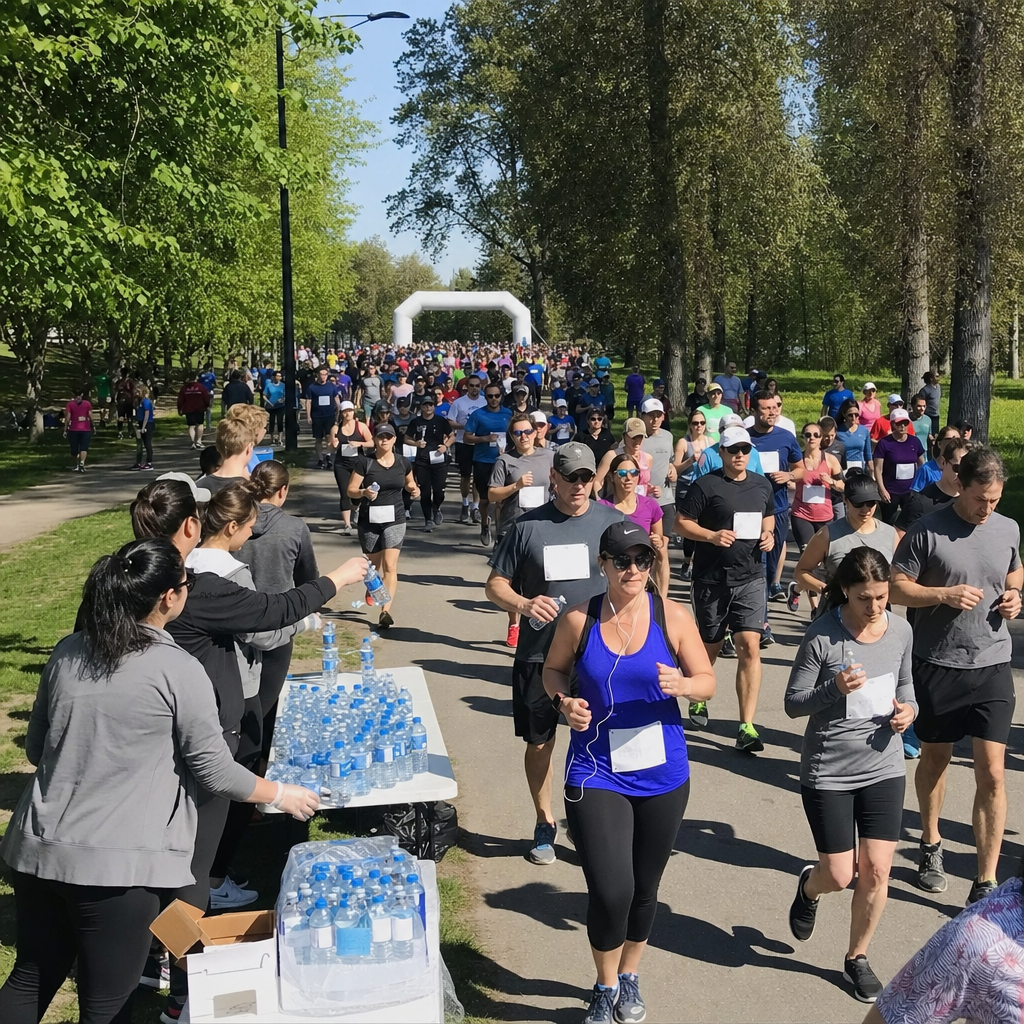 The Outdoor Charity Run
- capacity: 400 participants
- entry fee: $25 per person
- 30 volunteers needed
- outdoors; weather dependent
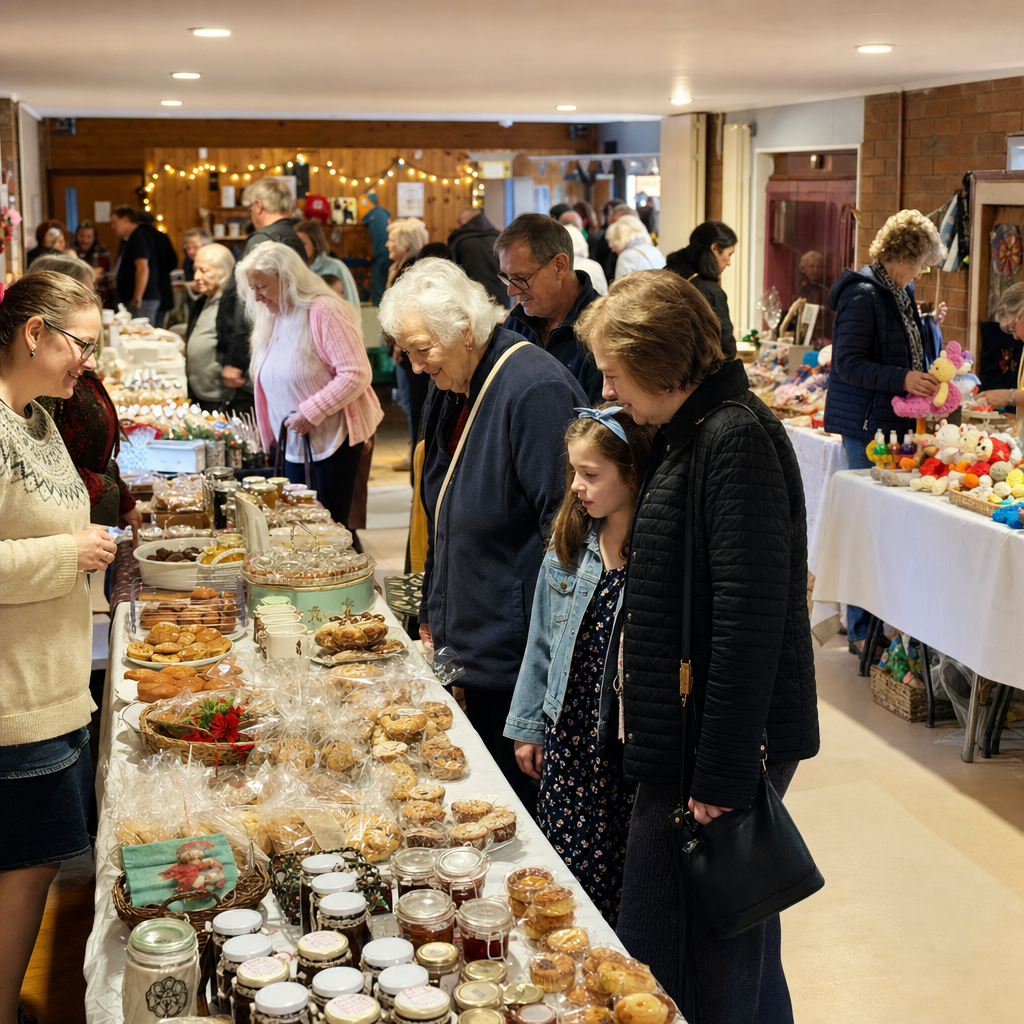 The Community Bake Sale and Craft Fair
- capacity: 150 participants
- entry fee: $10 per person
- 10 volunteers needed
- indoors; runs in any weather
Your supervisor is suggesting a different event (their choice, below). Persuade your supervisor that the option you chose is more suitable by comparing the two.
The Outdoor Charity Run - capacity: 400 participants
- entry fee: $25 per person
- 30 volunteers needed
- outdoors; weather dependent
 The Formal Gala Dinner
- capacity: 120 participants
- entry fee: $75 per person
- 20 volunteers needed
- indoor hall; elegant catered setting
A sample answer:
I’ve carefully compared our two final options and I think we should go with the outdoor charity run.
Firstly, as far as capacity is concerned, the run can welcome 400 participants, whereas the gala only has room for 120, so I think the most striking difference is how many people we can reach.
Secondly, in terms of price, although the gala costs $75 per person, the run costs only $25, so almost anyone in the community can afford to join. I personally think that means we’d raise money from many more people.
Finally, an obvious similarity between the two events is that both need volunteers, so we’d have to organize helpers either way.
These are just some of the reasons why I think we should select the outdoor charity run rather than the formal gala dinner.
Learn this task: Comparing & Persuading: the template part by part, useful phrases, note-taking, and three more sample answers.
Task 6: Dealing with a Difficult Situation (60s prep · 60s speaking)
Your co-worker, Dana, teaches a grade three class at the school where you both work. She is taking her class to the science museum next Friday, and you agreed to help her. Without enough adults, the class cannot go. Now your friend, Ray, has won tickets to a big hockey playoff game that same afternoon. Ray really wants you to come with him. Choose ONE: EITHER talk to Dana and explain why you can no longer help on the trip. OR talk to Ray and tell him why you will miss the game.
A sample answer:
Hi Ray, thanks for letting me know about the hockey tickets. I’m truly sorry, but I don’t think I can go to the game, for a number of reasons, which I will explain.
First of all, I promised Dana I’d help with her class trip to the science museum. I know this isn’t what you want to hear, but without enough adults, her grade three class can’t go. I really have no choice but to keep my promise.
Secondly, I’m sure you can find someone else to go with you. You might not know this, but my brother is a huge hockey fan. To make it up to you, I’d be happy to watch the next game with you.
So this is basically why I think I should help Dana. Thanks for your support and understanding.
Learn this task: Dealing with a Difficult Situation: the template part by part, useful phrases, note-taking, and three more sample answers.
Task 7: Expressing Opinions (30s prep · 90s speaking)
Answer the following question. Question: If the government paid the costs, should every college student spend a year studying in another country? Explain your reasons.
A sample answer:
I’ve been asked to explain whether I think every college student should spend a year studying abroad if the government pays the costs. I personally think it would be a great idea. I have some reasons, and I’ll explain them here in detail.
First of all, I feel that studying in another country can really improve students’ education. For instance, my cousin spent a year in Germany, and she learned more German there in six months than in three years of classes. So in my experience, living in a language is the fastest way to learn it.
Secondly, from my perspective, it’s also good for students’ personal growth. When you live far from home, you have to do everything yourself, and you meet people from many different countries. That’s exactly why I believe it makes students more independent and open-minded.
Finally, I believe that, economically speaking, there are many benefits to this idea. Employers value international experience, so these students are likely to find better jobs and pay more taxes later. Admittedly, a year abroad would cost the government a lot, but it would be a good investment in the future.
So these are only a few of the reasons why I think students should study abroad for a year.
Learn this task: Expressing Opinions: the template part by part, useful phrases, note-taking, and three more sample answers.
Task 8: Describing an Unusual Situation (30s prep · 60s speaking)
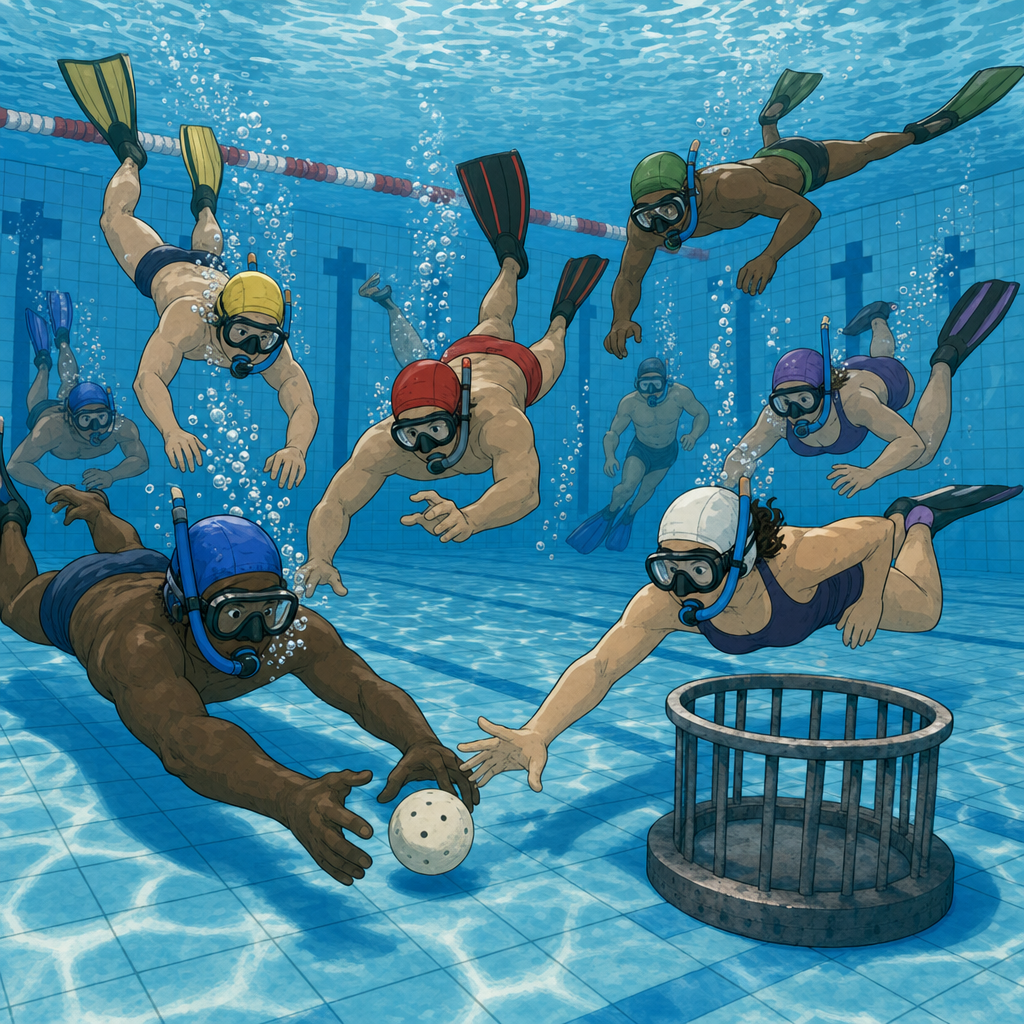
While swimming at a public pool, you see people playing a strange game underwater. Your friend Ali has been looking for a new sport to try. Call Ali, describe the game and how it is played, and ask if he wants to try it with you.
A sample answer:
Hi Ali, you won’t believe where I am right now! I’m at the public pool, and I can see some people playing a very strange game underwater. I’d like to describe some of the things that I can see here.
First of all, there are eight players, and they’re wearing swim caps in different colours, like yellow, red, blue and green. Also, apparently they’re all trying to get a white ball that’s lying on the floor of the pool. Another thing I can see here is what looks like a round metal basket, so I think the goal is to get the ball into it. The strangest thing is that everyone is diving down with masks and fins. It’s insane!
I was wondering if you’d like to try it with me next week. You’ve been looking for a new sport, and I’d love for you to see this. Talk to you soon!
Learn this task: Describing an Unusual Situation: the template part by part, useful phrases, note-taking, and three more sample answers.
Practicing with ChatGPT and other AI chatbots
Chatbots are useful for brainstorming ideas, explaining a grammar point, or checking whether a phrase sounds natural. For test practice, here’s how they compare:
| What test practice needs | General AI chatbot | Celpora |
|---|---|---|
| Test conditions | A chat: you can pause, rephrase and restart | The real screen layout, prep timer and recording timer for all 8 tasks, plus mock tests |
| A consistent score | A number, but not tied to CELPIP’s levels, and it can change if you ask again | Built to score the way CELPIP raters do: graded on the 4 CELPIP criteria and their parts with the same scoring guide every time, so the same answer gets a consistent result |
| Your mistakes | Usually a corrected version of your text | Mistakes marked on your own transcript, each with a short reason |
| A better answer | Often a polished rewrite, too long to say in the 60 or 90 seconds you get | Your answer said in the task’s template at your target level, with the level that version scores |
| Task strategy | Doesn’t know the 8 task types or their timing traps | Feedback uses the same templates and useful phrases you learn in this course |
| Progress | Each chat starts from zero | Your results per task are kept, and phrases from feedback can be saved |
Celpora feedback is an estimate based on CELPIP criteria, not a CELPIP score, and because it works from a transcript, it can’t hear your pronunciation or intonation. Use it to see what to improve; your actual level comes from the test itself.
Your baseline: record this now
Before the next lesson, record one answer. It shows where you’re starting. Use the recorder: it gives you the real Task 1 timing, plays your answer back with a transcript, and returns a level on each of the four criteria.
How to record it:
- Use the real timing: 30 seconds to prepare, 90 seconds to speak.
- Answer the way you would today. There’s no need to prepare anything or look anything up first.
- Write down your overall level, your lowest criterion, how long you spoke, and how many mistakes and fillers were marked. You’ll answer the same question again in the last lesson and compare.
What to look at in your feedback
- Your overall level and which of the four criteria is lowest. That’s your first focus.
- How long you spoke. If you finished well before 90 seconds, the template in Task 1 will help most.
- The marks on your transcript. If the same kind of mistake appears more than once, it’s worth fixing first.
- “Your answer, in the template”. This shows what your own ideas sound like at your target level.
How to use this course
- Start from your baseline. Note your level and which of the four criteria is lowest. That’s your first focus.
- Take the eight task lessons in order. Each one gives you the template, useful phrases and sample answers for one task, with a short practice.
- Practice each task until the template comes naturally. Answer it a few times with feedback, using different questions.
- Work on fluency and vocabulary. The Listenability and Vocabulary lessons help in every task.
- Practice frequently. Regular practice builds the habit, so on test day the timer and the templates feel familiar.
- Check your progress. Re-record a task you’ve already done and compare, try a full mock test when you’re ready, and re-record your baseline question in the last lesson.
Your answers don’t have to be true
You’re scored on your English, not on whether your story or opinion is true. If inventing a friend, a trip or an experience makes your answer easier to say well, invent it. It saves preparation time, and every task lesson uses this.
CELPIP Speaking FAQ
How long is the CELPIP Speaking test?
About 15–20 minutes: an unscored practice task, then 8 scored tasks, each with its own prep time (30–60 seconds) and speaking time (60 or 90 seconds).
Can I take notes during CELPIP Speaking?
You can use your preparation time to plan, and each task lesson in this course shows a quick note-taking method for that time. Check the current test-day rules from CELPIP before your test.
Is CELPIP Speaking hard?
It’s very trainable. The format never changes, so once you know the eight task types and have a plan for each, most of the difficulty is practice under the timer. Tasks 5 and 8 tend to feel hardest at first; Tasks 2, 3 and 4 tend to feel most predictable.
How can I practice CELPIP Speaking at home?
Practice under the real timing, get feedback on each answer, and act on one thing at a time. On Celpora you can practice all eight tasks in the test format with AI feedback based on CELPIP criteria, and track your level on each task.
Is the Celpora AI feedback accurate?
It’s built to score the way CELPIP raters do. Every answer is graded against the four CELPIP Speaking criteria and their parts, with the same scoring guide each time, so the same answer gets a consistent result and you can see real progress. It’s an estimate based on CELPIP criteria, not a CELPIP score, and because it works from a transcript, it can’t hear your pronunciation or intonation. Use it to see what to improve; your actual level comes from the test itself.
Can I use ChatGPT to practice for CELPIP Speaking?
It’s useful for ideas and vocabulary, but it doesn’t give you the timers, the task formats, or a consistent score. See Practicing with ChatGPT and other AI chatbots above.
Does my accent affect my CELPIP Speaking score?
Not by itself. Listenability measures whether you’re easy to follow: rhythm, stress, pausing and sentence structure. A clear speaker with any accent can reach the top levels.
Is grammar scored in CELPIP Speaking?
Yes, as part of Listenability (“grammar and sentence structure”). Grammar mistakes matter most when they make you harder to follow, and varied sentence structure counts in the same criterion.
What does CLB 9 sound like in Speaking?
Ideas developed with reasons and examples, regular complex sentences, precise vocabulary with few repeats, controlled pausing, and a tone that fits the task. See What each level sounds like.
What is the lowest CELPIP Speaking level?
CELPIP reports levels from 3 to 12. Below level 3, the result is shown as “M” (minimal proficiency or not enough to score).
What is a template in CELPIP Speaking?
A fixed plan for your answer: the same parts in the same order for every question of one task type, with a few ready-made phrases to start each part. See What a template is and the template for each task.
Before you move on
- I know the eight tasks and which two are 90 seconds
- I know what a template is, and that every task has one
- I can name the four criteria, and I know grammar is part of Listenability
- I know why range matters for levels 10 and above
- I’ve recorded my baseline and noted my level
- I know the level I’m aiming for




