
30 seconds to prepare · 60 seconds to speak
In CELPIP Speaking Task 8, you call a friend or relative, describe a strange picture they can’t see, and then make a request: 30 seconds to prepare, then 60 seconds to speak. The picture is unusual on purpose, so it’s full of things that are hard to name, and the trap I want you to avoid is trying to describe exactly those. Even if half the picture shows things you’ve never had to say in English, this lesson shows you how to choose five easy features to describe in your 30 seconds, and gives you a simple template that sounds like a natural, friendly phone call.
We’ll work through one example picture from start to finish:
- Preparation and note-taking: how to use your 30 seconds
- The template: a simple structure for a friendly phone call
- Useful phrases: phrases for surprise and for things you’re not sure about
- The example answer: a full answer that puts it all together
- More example answers: the template with three different questions
What Task 8 asks you to do
| What you do | Describe an unusual picture to a friend or relative on the phone, then make a request |
| Preparation | 30 seconds to look at the picture |
| Speaking | 60 seconds |
| Tense | Present: what you can see right now |
The picture shows something unexpected, surprising or strange. You describe it to someone who can’t see it, and then you make a request at the end. Here’s an example, as it appears on the test screen:
While swimming at a public pool, you see people playing a strange game underwater. Your friend Ali has been looking for a new sport to try. Call Ali, describe the game and how it is played, and ask if he wants to try it with you.
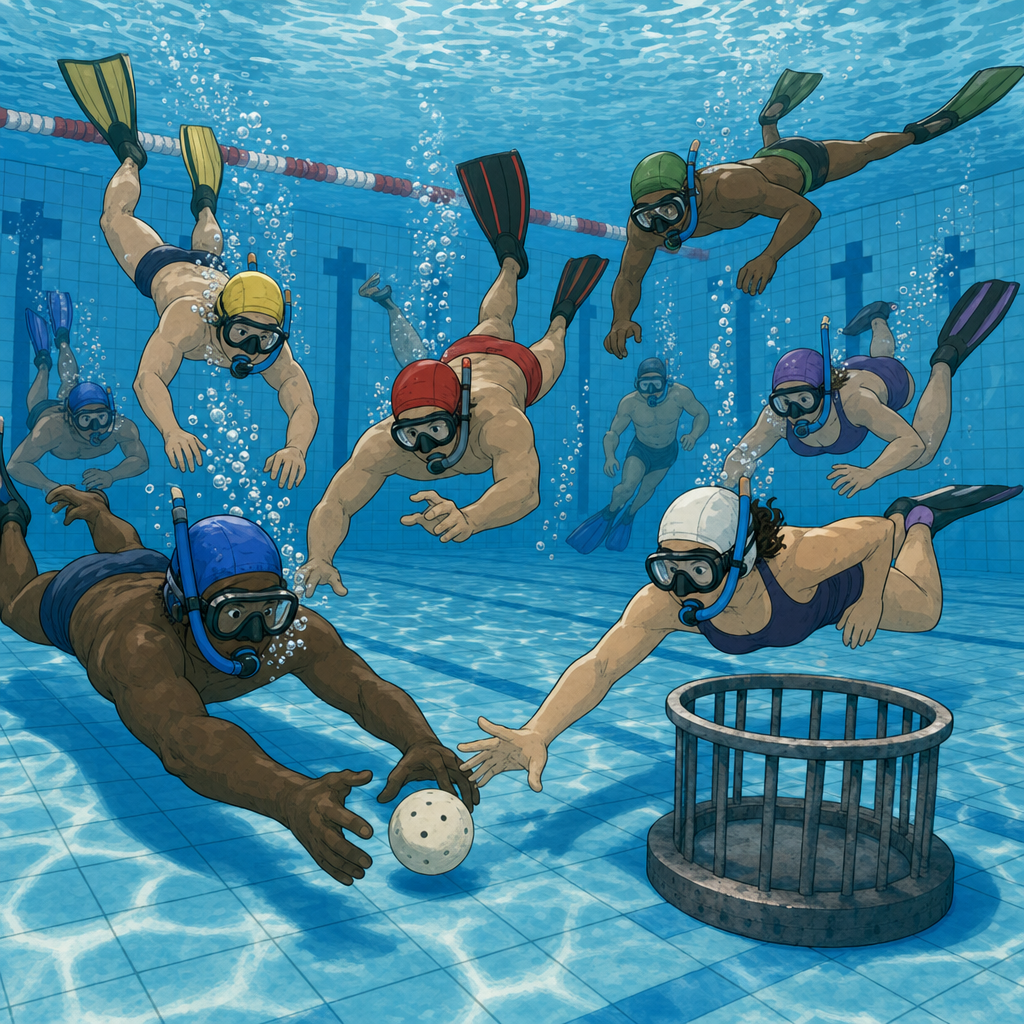
Read the question carefully, because it has two parts:
- Describe what you see.
- Make a request, which is almost always asking your friend something. Here: ask if he wants to try it with you.
The request changes from question to question, so check what it says before your 30 seconds start.
The answer at a glance
Before we go into detail, here’s the whole shape of a good Task 8 answer. Every part is explained below.
| Part | What you say |
|---|---|
| Greeting | Hi [name], |
| Surprise (optional) | You won’t believe where I am right now. |
| Where you are | I’m at [the setting]. |
| Purpose | I’d like to describe some of the things that I can see here. |
| Features 1–5 | First of all, there’s… Also,… Another thing I can see here is… |
| Request | I was wondering if [your request]. |
| Goodwill | I can’t wait for you to see all of this for yourself. Have a great day! |
The first lines are your introduction. Then you describe five features. Finally, you make your request and end with a friendly message.
That’s it. Now let’s go through each part.
1. Preparation and note-taking
You only have 30 seconds to look at a strange picture and plan 60 seconds of speaking. Do it in two steps.
Step 1: Choose five easy features to describe
Look at the picture and choose five features that are easy to describe in English. About five is what you need to reach 60 seconds.
The easiest features are colours and numbers:
| Easy feature | Example for our picture |
|---|---|
| Numbers | There are eight players. |
| Colours | They’re wearing caps in yellow, red, blue and green. |
| Shapes | There’s a round metal basket on the floor. |
| Simple objects | There’s a white ball on the bottom of the pool. |
| Simple actions | They’re diving down. |
Avoid features that are hard to say:
- Difficult actions. An action that needs a complicated verb, like “one player is lunging to intercept the ball”, is easy to get wrong. Say it simply instead: “they’re all trying to get the ball.”
- Nouns you don’t know. You may know the word in your own language, but not in English. If you don’t know the English word, leave it out or describe it: “a round metal basket”.
The same rule as Task 3 applies: decide in your 30 seconds what you will and won’t say, so you’re never stuck in the middle of a sentence.
Step 2: Plan your request
Remember the second part of the question. Decide what you’ll ask or say at the end, and write it in your notes so you don’t forget it. The request depends on the question:
| The question says… | Your request |
|---|---|
| ask if he wants to try it | I was wondering if you’d like to try it with me. |
| ask what you should do | I was wondering what you think I should do. |
| tell him why it isn’t safe | I think it’s really not safe, so you might want to… |
| suggest how to fix it | I was thinking we could fix it by… |
How to write your notes
- Write the five features as short keywords: a number, a colour, an object.
- Write the request at the end. One or two words is enough: try it with me?
- Keep it short. No full sentences.
- If time runs out, just start. The greeting and the setting give you a few more seconds to think.
Your notes for our picture could look like this:
Practice: five easy features and a request for two new pictures
Set a 30-second timer for each picture. Choose five easy features and plan your request. Then compare with the sample notes.
1. On a snowy morning at the bus stop, you notice the person next to you wearing strange winter boots. Your brother wants to find a fun birthday gift for his best friend. Call your brother, describe the boots, and ask whether his friend might like a pair.
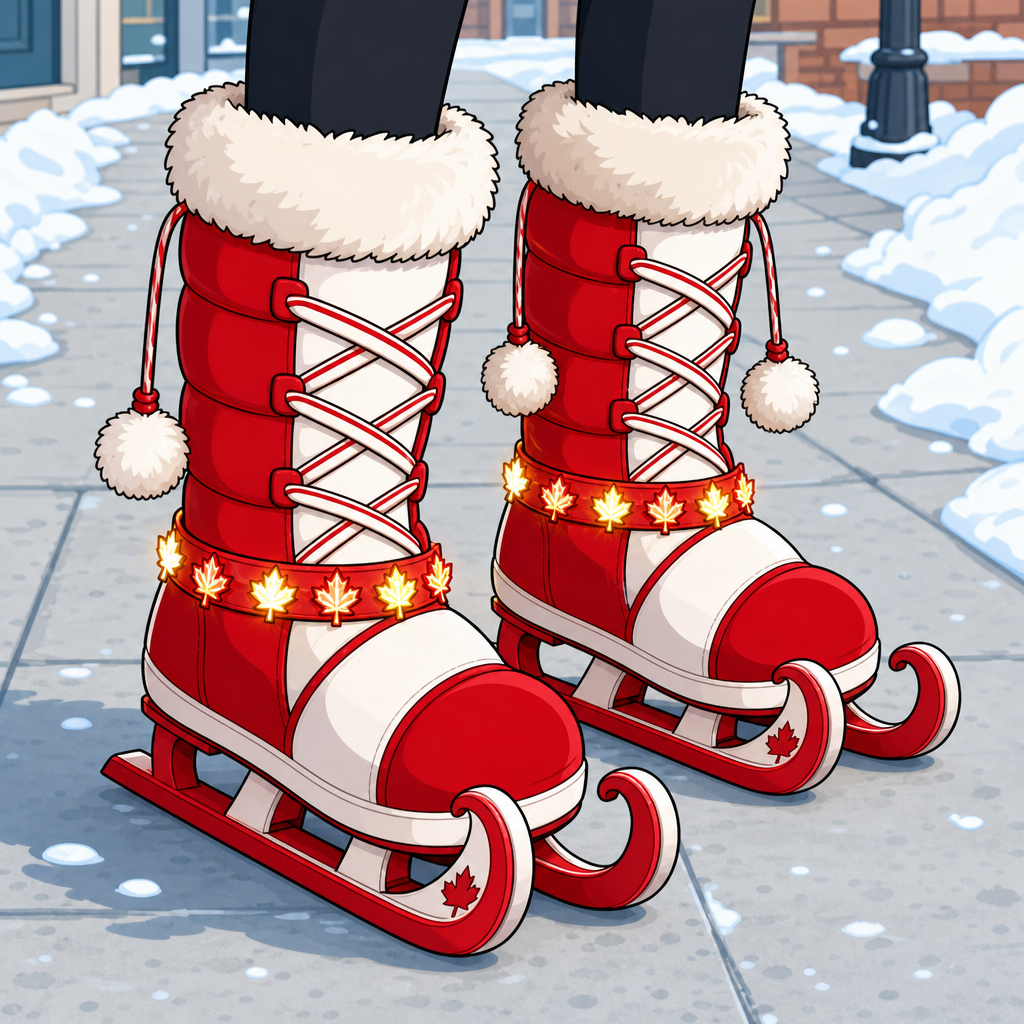
- 2 boots: red and white
- white fur at the top, 2 pom-poms
- curved metal bottoms, look like sleds
- small lights, maple leaves
- snowy sidewalk
- ask: would his friend like a pair?
2. Your friend Lucia told you that her pet bird flew out of her apartment window yesterday. Today, while walking in the park, you see a colourful bird on a low branch. Call Lucia, describe the bird, and ask if it could be hers.
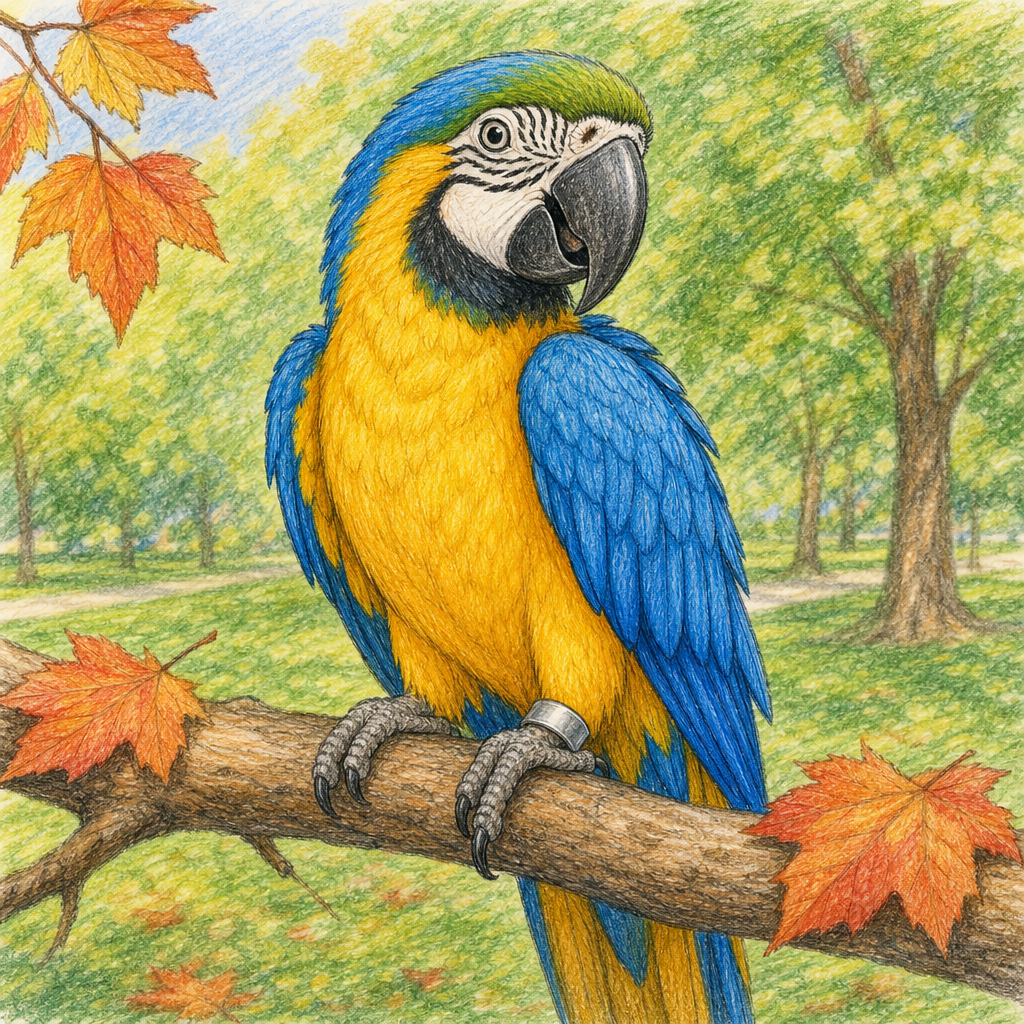
- big parrot: blue and yellow
- green on top of its head
- white face, big grey beak
- ring on its leg
- park, autumn leaves, low branch
- ask: could it be hers?
Recap: Choose five easy features (numbers, colours, shapes, simple objects), skip anything you can’t say in English, and plan your request. Write keywords only.
2. The template
Now we turn the notes into an organized answer that sounds like a real phone call. Here’s each part of the template, in order.
Introduction
The introduction has four small parts.
1. Greeting. Greet your friend by name. The name is usually in the question. If it isn’t, make one up: Hi Jack, Hi Jill. Any name is fine.
Hi Ali,
2. Show surprise (optional). It sets the scene, and it gives the call some energy. You can skip it if you’re short of time.
You won’t believe where I am right now!
3. Say where you are. The setting is usually in the question.
I’m at the public pool.
4. State your purpose.
I’d like to describe some of the things that I can see here.
Describe your features
Now go through your five features, one after another. Signal each one, so the listener can follow:
| Feature | Signal |
|---|---|
| 1 | First of all, there’s… |
| 2 | Also,… |
| 3 | Another thing I can see here is… |
| 4 | I can also see… |
| 5 | Finally,… |
First of all, there are eight players, and they’re wearing swim caps in different colours.
Make your request
Now the second part of the question. Almost every Task 8 question asks you to request something, such as inviting your friend to come and see it, or to try it. Use one of these:
- I was thinking…
- I was wondering if…
- Let me know if you would like to…
I was wondering if you’d like to try it with me next week.
End with goodwill
Finish with a short, friendly message.
I can’t wait for you to see all of this for yourself. Have a great day!
If you’re almost out of time, skip the goodwill message, but never skip the request. The request is part of what the question asks, and the goodwill message isn’t.
Save the template phrases
13 phrasesHow to use these: each phrase is ready to use in your writing or speaking. Replace the purple part with your own details. Tap the bookmark to save a phrase to Saved Words (free account), so you can review it before your test and use it in your practice.
Hi name,
You won't believe where I am right now.
I'm at the setting.
I'd like to describe some of the things that I can see here.
First of all, there's feature 1.
Also, feature 2.
Another thing I can see here is feature 3.
I can also see feature 4.
Finally, feature 5.
I was thinking your request.
I was wondering if your request.
Let me know if you would like to your request.
I can't wait for you to see all of this for yourself. Have a great day!
Recap: Greeting → surprise (optional) → where you are → purpose → five features, each with a signal → your request → a short goodwill message. If time is short, drop the goodwill message and keep the request.
3. Useful phrases
Useful phrases are expressions that suit the task perfectly: here, phrases for expressing surprise and for talking about things you’re not sure about. Using a variety of them shows the rater a wider range of vocabulary, which can raise your score.
Why these phrases? They’re natural, spoken English: common collocations and expressions that suit this task, not big written words. Learn more in Vocabulary That Lifts Your Level.
This is often considered the hardest task, so a few well-chosen phrases help a lot.
Here are thirteen of them at a glance:
| Useful phrase | Example |
|---|---|
| You won’t believe what I’m seeing here. / You’re not going to believe this, but… | You’re not going to believe this, but they’re playing underwater. |
| I know this sounds weird, but… / This might come as a surprise, but… | I know this sounds weird, but they’re playing a game at the bottom of the pool. |
| This will blow your mind. / It’s insane. | This will blow your mind. It’s insane! |
| Funnily enough,… / Surprisingly,… | Surprisingly, they all seem to be having fun. |
| what appears to be… / what seems to be… | There’s what appears to be a round metal basket. |
| apparently / seemingly | Apparently, they’re all trying to get the white ball. |
| looks like… | There’s a basket that looks like a small cage. |
| Believe it or not,… | Believe it or not, there are eight of them. |
| I’ve never seen anything like it. | I’ve never seen anything like it. |
| The strangest thing is… | The strangest thing is that they’re all wearing masks and fins. |
| Picture this: | Picture this: eight people diving to the bottom of a pool. |
| Would you be up for…? / How would you feel about…? | Would you be up for trying it with me? |
| I’d love for you to… | I’d love for you to see this. |
Tap the bookmark on any phrase below to save it to your Saved phrases library, so you can review it before your test. Now let’s look at each one.
Expressing surprise
You’re calling a friend about something strange, so sound surprised. These phrases do it for you. Use a different one each time.
You won’t believe what I’m seeing here. / You’re not going to believe this, but…
- “You won’t believe what I’m seeing here.”
- “You’re not going to believe this, but there are eight people playing a game underwater.”
Save these phrases
2 phrasesHow to use these: each phrase is ready to use in your writing or speaking. Replace the purple part with your own details. Tap the bookmark to save a phrase to Saved Words (free account), so you can review it before your test and use it in your practice.
You won't believe what I'm seeing here.
You're not going to believe this, but what you see.
I know this sounds weird, but… / This might come as a surprise, but…
- “I know this sounds weird, but they’re playing a game at the bottom of the pool.”
- “This might come as a surprise, but the whole game is happening at the bottom of the pool.”
Save these phrases
2 phrasesHow to use these: each phrase is ready to use in your writing or speaking. Replace the purple part with your own details. Tap the bookmark to save a phrase to Saved Words (free account), so you can review it before your test and use it in your practice.
I know this sounds weird, but what you see.
This might come as a surprise, but what you see.
This will blow your mind. / It’s insane.
Short and informal, which suits a call with a friend.
- “This will blow your mind.”
- “It’s insane!”
Save these phrases
2 phrasesHow to use these: each phrase is ready to use in your writing or speaking. Replace the purple part with your own details. Tap the bookmark to save a phrase to Saved Words (free account), so you can review it before your test and use it in your practice.
This will blow your mind.
It's insane.
Funnily enough,… / Surprisingly,…
Use these before a detail that is unexpected.
- “Funnily enough, everyone looks calm, even though it’s a fast game.”
- “Surprisingly, they all seem to be having fun.”
Save these phrases
2 phrasesHow to use these: each phrase is ready to use in your writing or speaking. Replace the purple part with your own details. Tap the bookmark to save a phrase to Saved Words (free account), so you can review it before your test and use it in your practice.
Funnily enough, what you see.
Surprisingly, what you see.
Believe it or not,…
- “Believe it or not, there are eight of them down there.”
Save these phrases
1 phraseHow to use these: each phrase is ready to use in your writing or speaking. Replace the purple part with your own details. Tap the bookmark to save a phrase to Saved Words (free account), so you can review it before your test and use it in your practice.
Believe it or not, what you see.
I’ve never seen anything like it.
A short sentence that adds emotion between two descriptions.
- “I’ve been coming to this pool for years, but I’ve never seen anything like it.”
Save these phrases
1 phraseHow to use these: each phrase is ready to use in your writing or speaking. Replace the purple part with your own details. Tap the bookmark to save a phrase to Saved Words (free account), so you can review it before your test and use it in your practice.
I've never seen anything like it.
The strangest thing is…
Use it for the most surprising detail, usually near the end of your features.
- “The strangest thing is that they’re all wearing masks and fins.”
Save these phrases
1 phraseHow to use these: each phrase is ready to use in your writing or speaking. Replace the purple part with your own details. Tap the bookmark to save a phrase to Saved Words (free account), so you can review it before your test and use it in your practice.
The strangest thing is what you see.
Describing
Picture this:
A storyteller’s way to start describing. It makes your friend imagine the scene.
- “Picture this: eight people diving to the bottom of a swimming pool.”
Save these phrases
1 phraseHow to use these: each phrase is ready to use in your writing or speaking. Replace the purple part with your own details. Tap the bookmark to save a phrase to Saved Words (free account), so you can review it before your test and use it in your practice.
Picture this: what you see.
Signalling uncertainty
In unusual pictures, there’s often an object you can’t name. Don’t stop: use one of these, and keep going.
what appears to be… / what seems to be…
Use these before a noun you’re not sure about.
- “There’s what appears to be a round metal basket on the floor.”
- “The players are reaching for what seems to be a white ball.”
Save these phrases
2 phrasesHow to use these: each phrase is ready to use in your writing or speaking. Replace the purple part with your own details. Tap the bookmark to save a phrase to Saved Words (free account), so you can review it before your test and use it in your practice.
Someone is holding what appears to be an object.
There is what seems to be an object.
apparently / seemingly
- “Apparently, they’re all trying to get the ball into the basket.”
- “The players are seemingly having a lot of fun.”
Save these phrases
2 phrasesHow to use these: each phrase is ready to use in your writing or speaking. Replace the purple part with your own details. Tap the bookmark to save a phrase to Saved Words (free account), so you can review it before your test and use it in your practice.
Apparently, someone is doing something.
Someone is seemingly doing something.
looks like…
This is the easiest way to describe something you can’t name: say what it’s like.
- “There’s a basket that looks like a small cage.”
Save these phrases
2 phrasesHow to use these: each phrase is ready to use in your writing or speaking. Replace the purple part with your own details. Tap the bookmark to save a phrase to Saved Words (free account), so you can review it before your test and use it in your practice.
It's a thing that looks like something you know.
Something looks like something you know.
Making your request
Would you be up for…? / How would you feel about…?
Two friendly ways to ask. They sound more natural than Do you want to…?
- “Would you be up for trying it with me next week?”
- “How would you feel about coming to the pool with me on Saturday?”
Save these phrases
2 phrasesHow to use these: each phrase is ready to use in your writing or speaking. Replace the purple part with your own details. Tap the bookmark to save a phrase to Saved Words (free account), so you can review it before your test and use it in your practice.
Would you be up for doing something?
How would you feel about doing something?
Ending on a friendly note
I’d love for you to…
- “I’d love for you to see this. I can’t wait for you to see all of this for yourself.”
Save these phrases
2 phrasesHow to use these: each phrase is ready to use in your writing or speaking. Replace the purple part with your own details. Tap the bookmark to save a phrase to Saved Words (free account), so you can review it before your test and use it in your practice.
I'd love for you to do something.
I can't wait for you to see all of this for yourself.
How many should you use? Try to use four or five different useful phrases in one answer, including at least one for surprise and one for uncertainty. You don’t need all of them.
One more tip: use the present continuous
You’re describing what’s happening right now, so use the present continuous (is / are + -ing), as in Task 3.
| ✗ | ✓ |
|---|---|
| The players dive down. | The players are diving down. |
| They try to get the ball. | They are trying to get the ball. |
4. The example answer
Here’s a full answer to our question. It follows the template and uses some of the useful phrases. Template phrases and useful phrases are in bold.
Hi Ali, you won’t believe where I am right now! I’m at the public pool, and I can see some people playing a very strange game underwater. I’d like to describe some of the things that I can see here.
First of all, there are eight players, and they’re wearing swim caps in different colours, like yellow, red, blue and green. Also, apparently they’re all trying to get a white ball that’s lying on the floor of the pool. Another thing I can see here is what looks like a round metal basket, so I think the goal is to get the ball into it. The strangest thing is that everyone is diving down with masks and fins. It’s insane!
I was wondering if you’d like to try it with me next week. You’ve been looking for a new sport, and I’d love for you to see this. Talk to you soon!
What makes it work:
- It follows the template from start to finish, so it sounds like a real, organized phone call.
- It describes easy features: numbers (eight players), colours (yellow, red, blue, green), a shape (round) and simple objects (ball, basket).
- It uses a surprise phrase at the start and the end of the description, and an uncertainty phrase for the object it can’t name.
- It uses the present continuous (they’re diving, they’re all trying).
- It makes the request the question asked for, and ends on a friendly note.
More example answers
The same template works for every Task 8 question, but the request changes. These three answers show it with a warning, a problem to solve, and a description that helps someone find you. Open the ones you want to see.
Example 2: A warning (tell him why it isn’t safe)
You are a passenger in a car on the highway. Just ahead, your friend Marco is moving to his new home in a pickup truck. Call Marco, describe what you see in the back of his truck, and tell him why it is not safe.
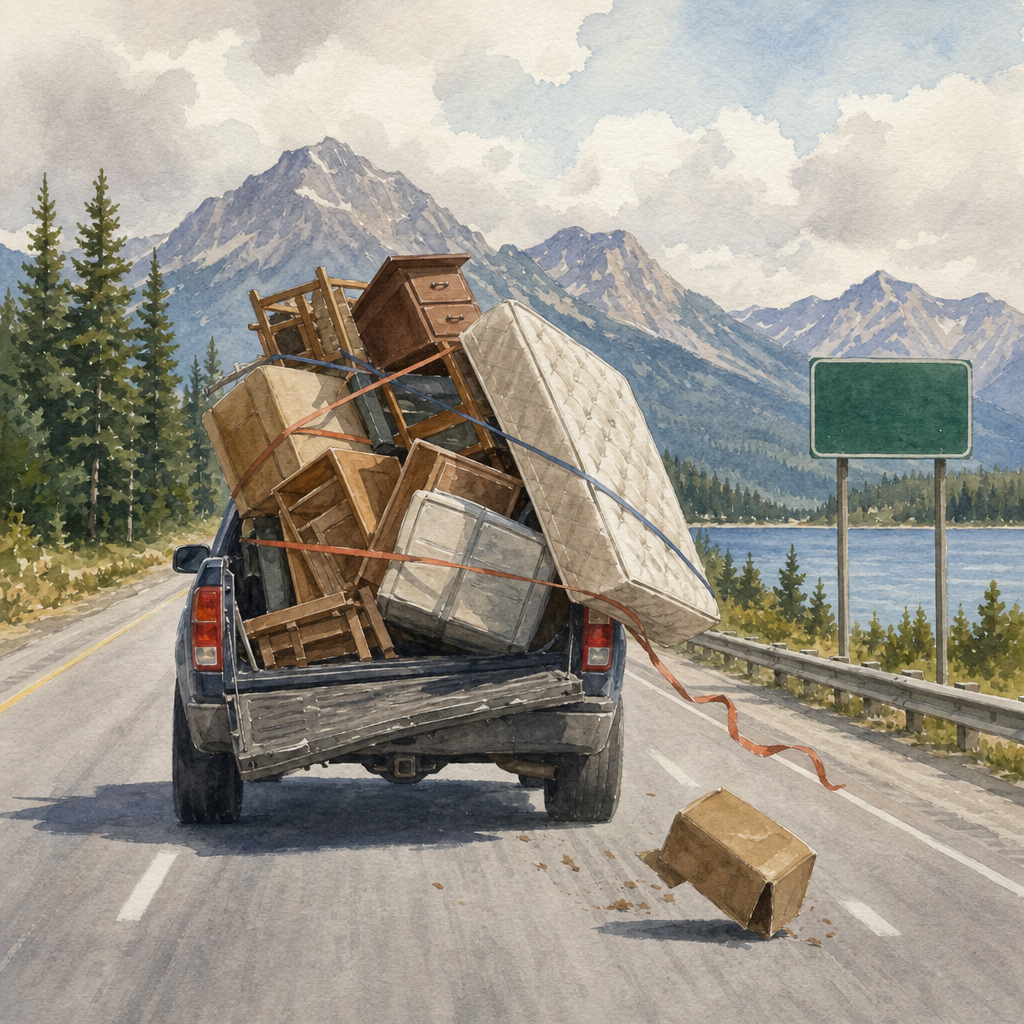
Hi Marco, you won’t believe what I’m seeing right now! I’m in the car right behind your truck on the highway. I’d like to describe some of the things that I can see here, because I’m a bit worried.
First of all, there’s a huge pile of furniture in the back, much higher than the truck itself. Also, a big mattress is leaning over the side, and it looks like it could slide off any second. Another thing I can see here is that the back of the truck is hanging open. I can also see an orange strap that’s come loose, and it’s flapping in the wind. Finally, a cardboard box has just fallen onto the road!
I think it’s really not safe, so you might want to pull over at the next exit and tie everything down again. Drive carefully, and call me when you’ve stopped.
About 55 seconds at a natural pace.
What to notice:
- This question asks for a warning, not an invitation, so the surprise phrase sounds worried, not excited.
- It skips words that are hard to say quickly, like tailgate. The back of the truck is clear enough.
Example 3: A problem (ask what to do)
Your friend Hana ordered a hand-painted mug online and had it mailed to you as a birthday gift. It arrived this morning, but when you poured your coffee, you found a problem. Call Hana, describe the mug and the problem, and ask what you should do.

Hi Hana, the mug you sent me arrived this morning! I’m at home, and I’m looking at it right now. I’d like to describe some of the things that I can see here.
First of all, there’s a beautiful hand-painted picture of a lake on the front, with a little red canoe on the water. Also, there are red and orange maple leaves on the left side, and dark green trees on the far shore. Another thing I can see here is a big cream-coloured handle on the right. But the strangest thing is that there’s a long, thin crack running from the top all the way to the bottom. Finally, when I poured my coffee, it started leaking, and now there’s a brown puddle on the table!
I was wondering what you think I should do. Should I contact the shop, or would you rather do it yourself? Thanks again for such a thoughtful gift.
About 60 seconds at a natural pace.
What to notice:
- The answer describes the nice parts first, then the problem. It’s a gift, so that keeps the call kind.
- The request matches the question: I was wondering what you think I should do.
Example 4: Helping someone find you
You are at a fall fair, waiting for your cousin, Mei, who has never been there before. You are sitting on a bench under a large, decorated tree. Call Mei and describe the tree so that she can find you.
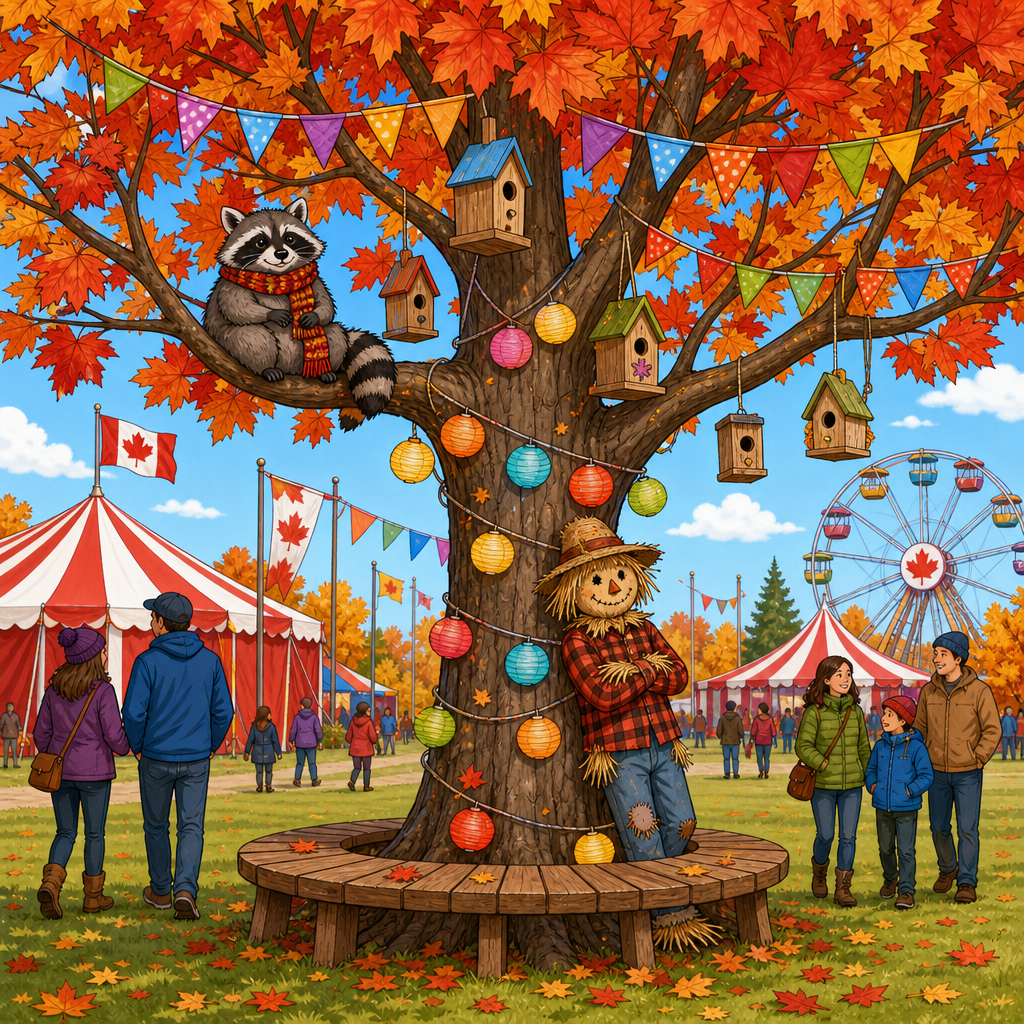
Hi Mei, I’m at the fall fair, sitting on a bench under a big tree. I’d like to describe it, so you can find me easily.
First of all, there’s a round wooden bench that goes all the way around the trunk, and that’s where I’m sitting. Also, the tree is huge, with bright red and orange leaves. Another thing I can see here is lots of round paper lanterns in different colours, like pink, blue and yellow, hanging around the trunk. I can also see a scarecrow in a red checked shirt and a straw hat, leaning against the tree. Finally, and believe it or not, there’s what looks like a raccoon wearing a striped scarf, sitting on one of the branches!
The tree is between two red-and-white tents, and you can see the Ferris wheel from here. Let me know when you’re close, and I’ll wave to you. See you soon!
About 60 seconds at a natural pace.
What to notice:
- This question has no request. Its purpose is to help Mei find you, so the answer ends with landmarks (the tents, the Ferris wheel) and a plan to meet.
- What looks like… is useful when you’re not sure what something is: here, the raccoon.
Common mistakes
| Mistake | Fix |
|---|---|
| Describing things that need difficult verbs or unknown nouns | Choose easy features: numbers, colours, shapes |
| Stopping when you don’t know a word | Use what appears to be… or looks like… |
| Forgetting the request | Write it in your notes. It’s part of the question |
| Describing without any surprise | Use you won’t believe…, the strangest thing is… |
| Sounding like a formal report | Remember you’re calling a friend: be friendly and excited |
| ”The players dive down." | "The players are diving down.” |
| Running out of time before the request | If time is short, skip the goodwill message, not the request |
Practice
Use the template and at least four useful phrases to answer this question, then listen back to your recording.
Check your recording:
- I chose five easy features
- I greeted my friend and said where I was
- I signalled each feature (first of all, also, finally)
- I used the present continuous
- I used at least four different useful phrases, including surprise and uncertainty
- I made the request the question asked for
- I spoke for at least 50 seconds
Open a Task 8 set on Celpora, use the template, and get instant AI feedback on all four scoring areas.
Practice Task 8: Describing an Unusual Situation. 30s prep · 60s speaking · AI feedback on all four dimensions




